Relative humidity and temperature
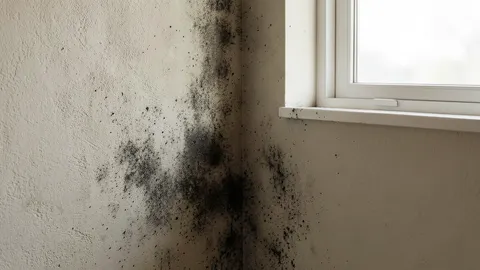
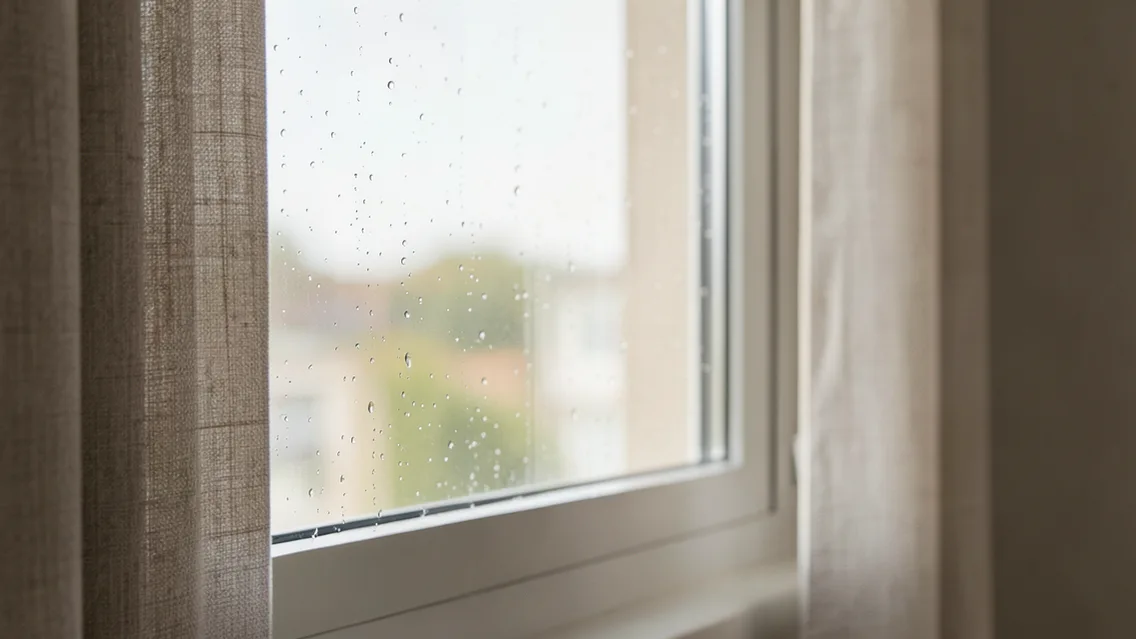
The source discusses indoor humidity effects. Relative humidity compares actual water vapor with saturation at the same temperature, so it may change as temperature changes without adding water. Condensation occurs when a surface reaches or falls below dew-point conditions, and materials may be damp without a conspicuously high room-air reading. Measure humidity and temperature appropriately across locations and times rather than relying on one reading.
Comfort, health and air quality
Persistent high humidity may support mold and some allergens, while dry air may irritate some individuals. Heat and humidity interact in thermal comfort and evaporative cooling through sweating. Humidity readings cannot diagnose diseases, and humidity alone does not cause tuberculosis or other infectious diseases. Seek appropriate healthcare for persistent or worsening symptoms. Humidity targets vary with climate, building and air-quality requirements.
Source control and prevention
Distinguish water leaks, condensation and indoor vapor sources. Review mechanical and natural ventilation, HVAC, condensate drainage, insulation and thermal bridges for the building; opening windows in humid outdoor air may increase moisture loads. A suitable dehumidifier may help control humidity but cannot repair a leaking pipe. Salt color or fragrances do not validate success; obtain specialist remediation for extensive mold or damage near electricity. Monitor readings after repairs.
Comparison and verification table
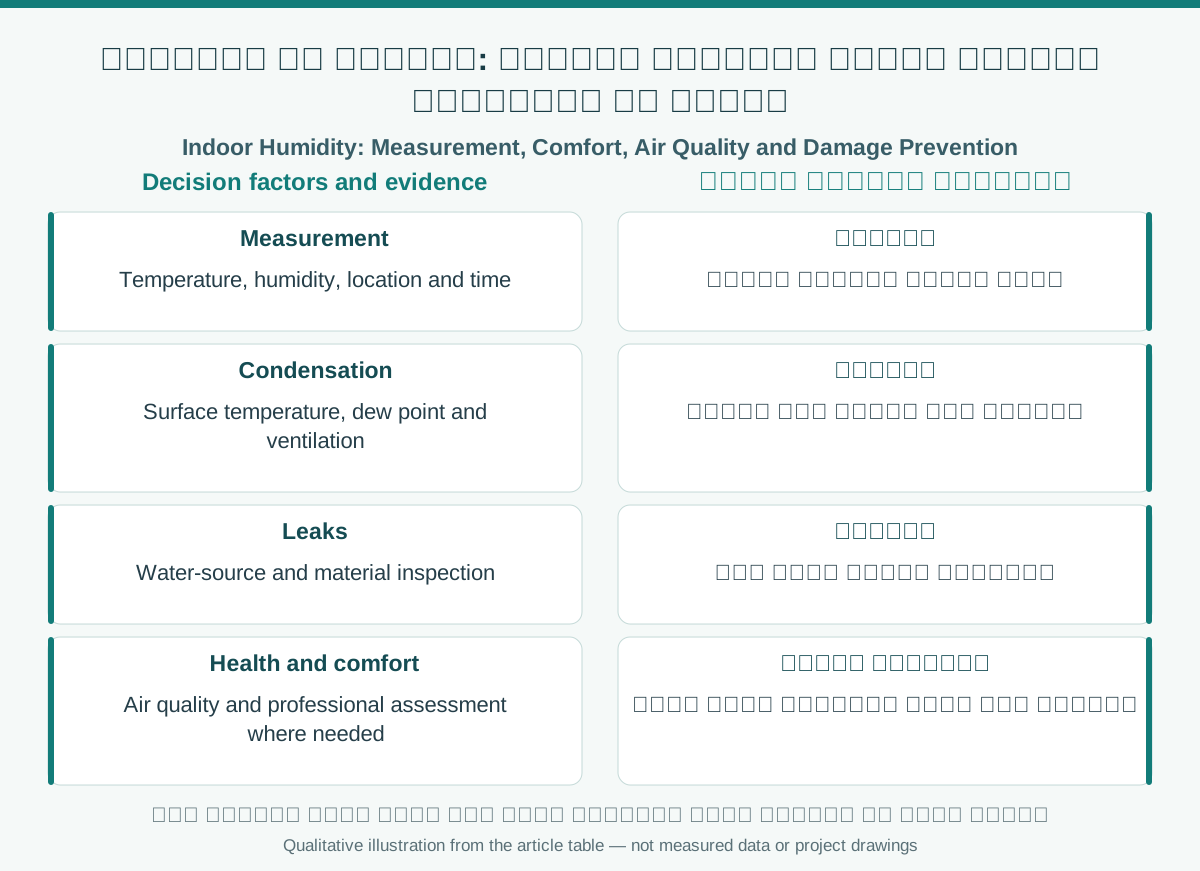
| Factor | Evidence or action |
|---|---|
| Measurement | Temperature, humidity, location and time |
| Condensation | Surface temperature, dew point and ventilation |
| Leaks | Water-source and material inspection |
| Health and comfort | Air quality and professional assessment where needed |
A visual reading of the article topic
- 01Relative humidity and temperature
- 02Comfort, health and air quality
- 03Source control and prevention
- 04Comparison and verification table
Practical workflow
- 01 Measure and record conditions
- 02 Diagnose moisture source
- 03 Choose climate-suitable controls
- 04 Monitor for recurring damage
Conceptual editorial diagram; not measured data.
Sources and limitations
Editorial adaptation based on the original WordPress archive; original source retained separately. Historical humidity and temperature figures, health claims and household remedies require specialist verification. Salt remedies and medical causal claims are not endorsed. This is educational, not medical diagnosis or treatment.
Topics and source excerpts
| Topic | Excerpt from article |
|---|---|
| Relative humidity and temperature | The source discusses indoor humidity effects. |
| Comfort, health and air quality | Persistent high humidity may support mold and some allergens, while dry air may irritate some individuals. |
| Source control and prevention | Distinguish water leaks, condensation and indoor vapor sources. |
| Practical workflow | 01 Measure and record conditions |
| Sources and limitations | Editorial adaptation based on the original WordPress archive; original source retained separately. |
| References and limitations | Measure humidity and investigate condensation, leakage and ventilation; addressing water and vapor sources helps prevent mold. |
Source excerpts organized for comparison, not newly researched findings.
References and limitations
Measure humidity and investigate condensation, leakage and ventilation; addressing water and vapor sources helps prevent mold. Humidity measurements do not diagnose illness.
The following references support selected topics in the article.
EPA A Brief Guide to Mold, Moisture and Your Home