Why education needs to evolve
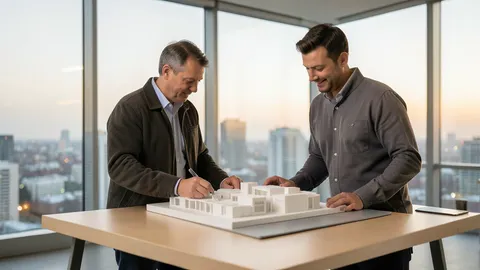
The source questions whether architecture curricula match practice amid AI, VR and robotics. This does not mean replacing studio, history or theory with software; it means connecting critical thinking, creativity, users, climate, construction and technology. Labor-market needs vary by region and role; define demonstrable graduate competencies rather than relying on broad employment predictions.
Studio as a rehearsal for practice
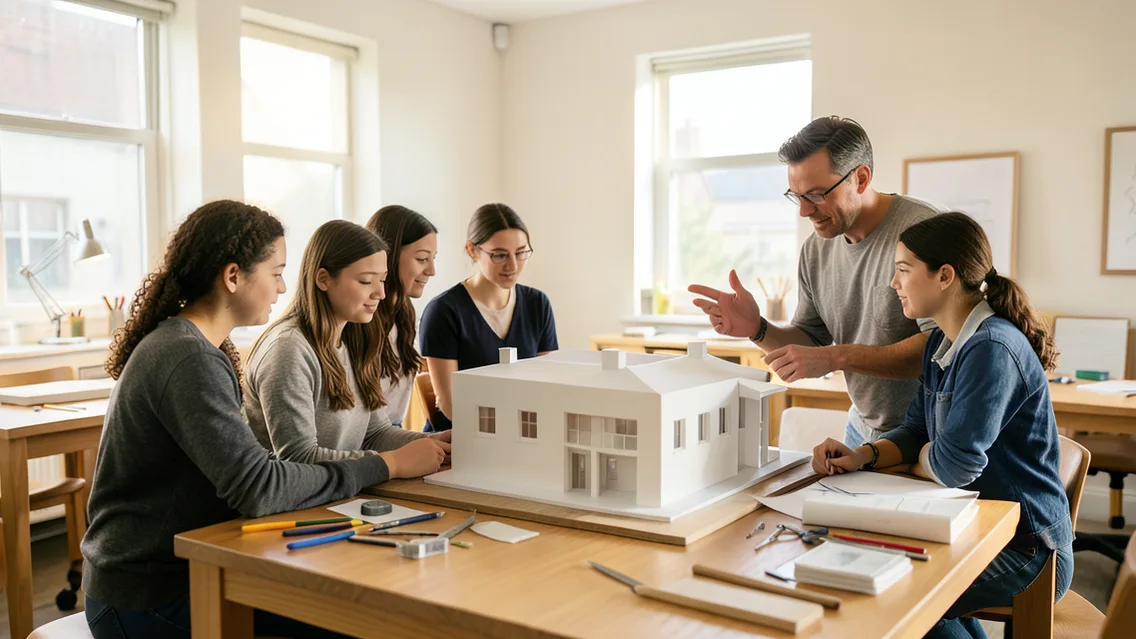
Studio projects can include user-based programming, site analysis, a conceptual budget, structural and services coordination, option review and buildability. Digital models, simulation and immersive exercises can expose problems before construction without relieving students from checking outputs, dimensions and sources. Interdisciplinary exercises teach team responsibilities, while supervised practice serves a role that simulation alone cannot replace.
Assessment and lifelong learning
Assess students' ability to explain decisions, document assumptions, compare options, manage constraints and errors and review performance. Teach data ethics, intellectual property, privacy and AI limitations alongside tool skills. Institutions can work with practitioners, alumni and employers to update exercises using evidence. Aim for curiosity and a method of learning and adaptation, not a static software list or employment promise.
Comparison and verification table
| Factor | Evidence or action |
|---|---|
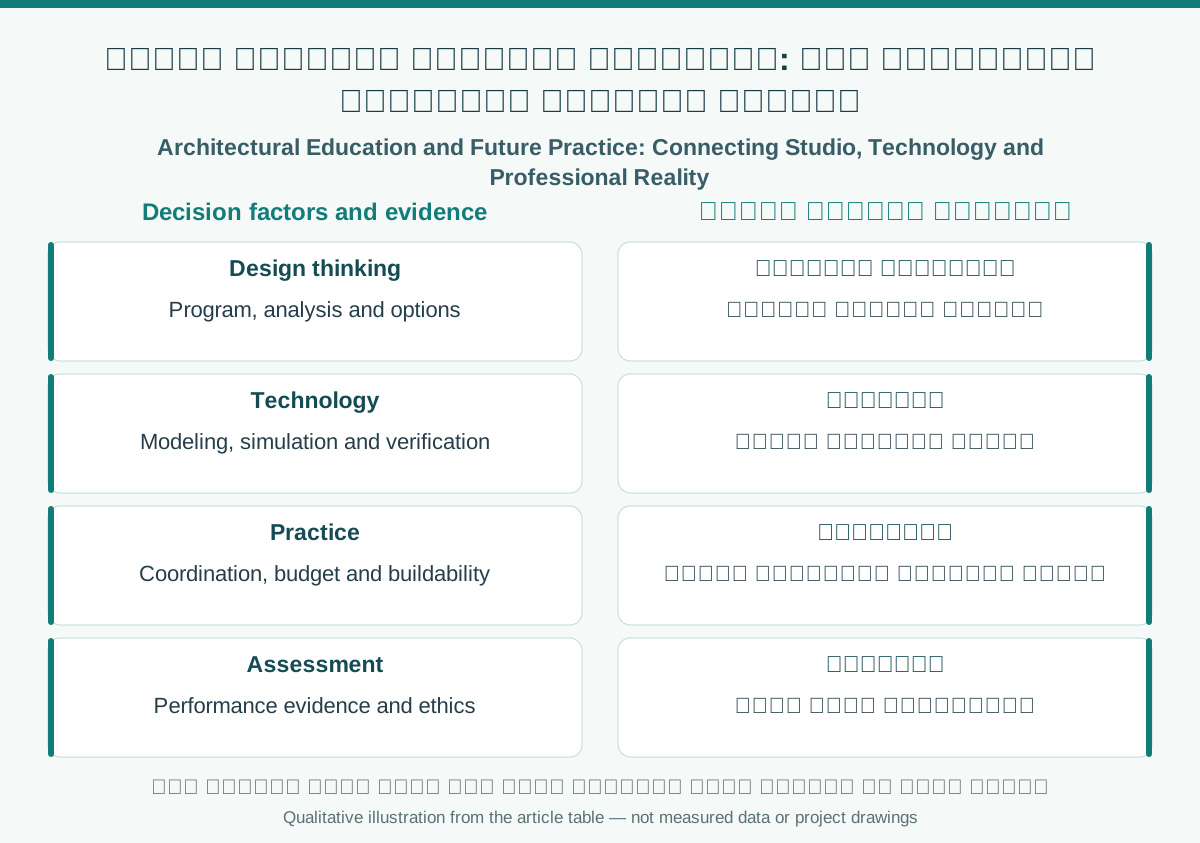
| Design thinking | Program, analysis and options |
| Technology | Modeling, simulation and verification |
| Practice | Coordination, budget and buildability |
| Assessment | Performance evidence and ethics |
A visual reading of the article topic
- 01Why education needs to evolve
- 02Studio as a rehearsal for practice
- 03Assessment and lifelong learning
- 04Comparison and verification table
Practical workflow
- 01 Define graduate competencies
- 02 Integrate technology in studio
- 03 Test realistic cases
- 04 Review outcomes with practitioners
Conceptual editorial diagram; not measured data.
Sources and limitations
Editorial adaptation based on the original WordPress archive; original source retained separately. Historical AI market and employment projections are not adopted here; they require current evidence and clear definitions.
Topics and source excerpts
| Topic | Excerpt from article |
|---|---|
| Why education needs to evolve | The source questions whether architecture curricula match practice amid AI, VR and robotics. |
| Studio as a rehearsal for practice | Studio projects can include user-based programming, site analysis, a conceptual budget, structural and services coordination, option review and buildabilit… |
| Assessment and lifelong learning | Assess students' ability to explain decisions, document assumptions, compare options, manage constraints and errors and review performance. |
| Practical workflow | 01 Define graduate competencies |
| Sources and limitations | Editorial adaptation based on the original WordPress archive; original source retained separately. |
| References and limitations | Accreditation and educational frameworks evolve; digital collaboration and AI risk review can inform studio teaching. |
Source excerpts organized for comparison, not newly researched findings.
References and limitations
Accreditation and educational frameworks evolve; digital collaboration and AI risk review can inform studio teaching. The curriculum proposal is neither a Saudi requirement nor evidence of employment outcomes.
The following references support selected topics in the article.
- NAAB Accreditation Criteria
- buildingSMART — openBIM
- NIST AI RMF
- NIST AI RMF Playbook