System type comes first
The source covers water-based piping, other suppression agents and fire pumps. Fire protection engineers select systems for hazards, occupancy, materials, alarms and egress requirements. Sprinkler, foam, gas and chemical systems differ in design, materials and components; piping specifications cannot be transferred across systems without verification. Some agents require dedicated analysis of occupant and environmental safety.
Pipes, fittings and hydraulics
Systems may use steel, ductile iron or other approved materials depending on application. Design establishes pipe type, thickness, pressure rating, compatibility, approvals, joints, supports and corrosion protection through calculations and requirements. Schedule numbers or paint colors do not establish product compliance. Pump, water source, storage and control needs follow hydraulic demand, supply and reliability rather than hazard classification alone.
Acceptance, maintenance and operating safety
Verify installation, product conformity, joints and welding supervision where relevant; qualified teams conduct hydraulic, functional, pump and alarm tests under approved plans. Do not set test pressure or duration from a generic percentage or pressure-test without suitable risk assessment. Retain approvals, inspections, maintenance and impairment-management records; do not disable or modify protection without required procedures and approvals to protect occupants.
Comparison and verification table
| Factor | Evidence or action |
|---|---|
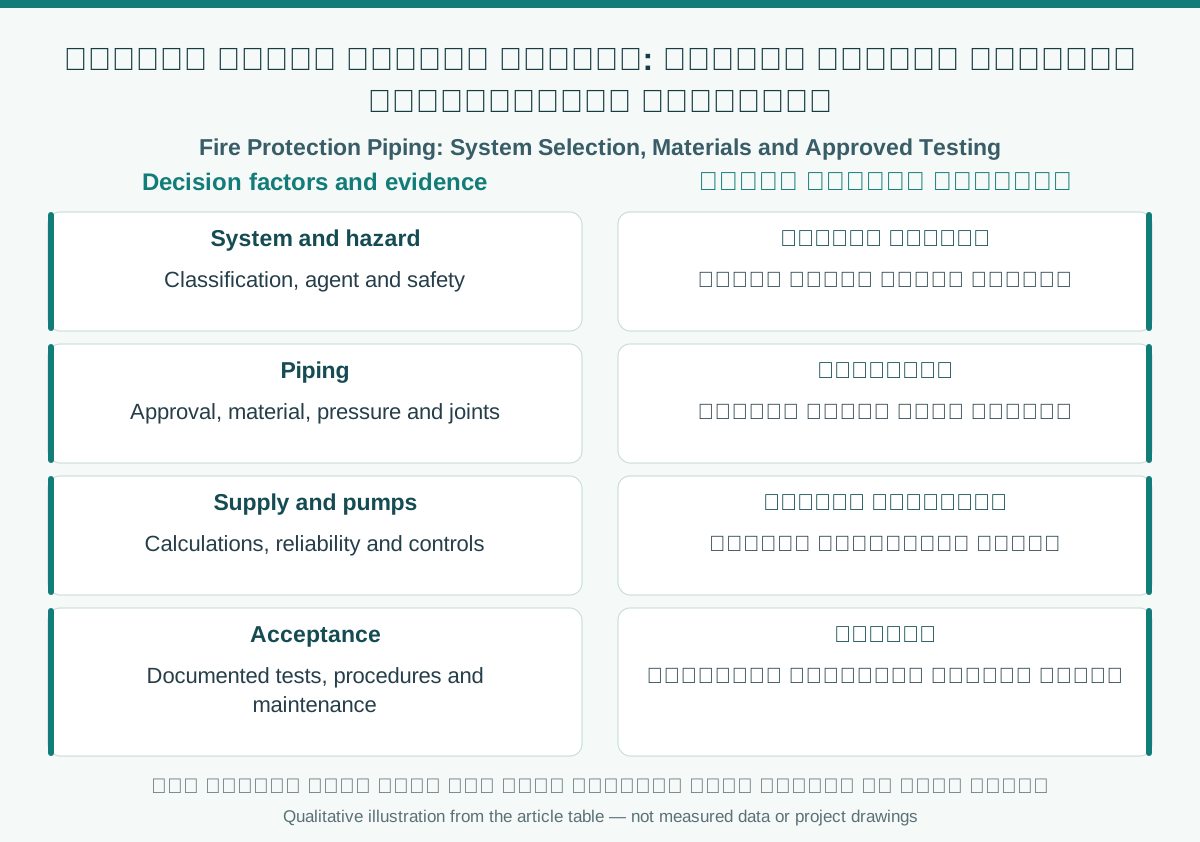
| System and hazard | Classification, agent and safety |
| Piping | Approval, material, pressure and joints |
| Supply and pumps | Calculations, reliability and controls |
| Acceptance | Documented tests, procedures and maintenance |
A visual reading of the article topic
- 01System type comes first
- 02Pipes, fittings and hydraulics
- 03Acceptance, maintenance and operating safety
- 04Comparison and verification table
Practical workflow
- 01 Define hazard and system
- 02 Approve calculations and components
- 03 Coordinate installation and testing
- 04 Maintain system readiness
Conceptual editorial diagram; not measured data.
Sources and limitations
Editorial adaptation based on the original WordPress archive; original source retained separately. Historical thickness, pressure, welding, color and agent tables have not been verified against applicable editions. This is educational, not a fire system specification, design or testing instruction; consult code and authorities.
Topics and source excerpts
| Topic | Excerpt from article |
|---|---|
| System type comes first | The source covers water-based piping, other suppression agents and fire pumps. |
| Pipes, fittings and hydraulics | Systems may use steel, ductile iron or other approved materials depending on application. |
| Acceptance, maintenance and operating safety | Verify installation, product conformity, joints and welding supervision where relevant; qualified teams conduct hydraulic, functional, pump and alarm tests… |
| Practical workflow | 01 Define hazard and system |
| Sources and limitations | Editorial adaptation based on the original WordPress archive; original source retained separately. |
| References and limitations | Qualified professionals verify the Saudi fire code and adopted references. |
Source excerpts organized for comparison, not newly researched findings.
References and limitations
Qualified professionals verify the Saudi fire code and adopted references. NFPA 13 covers sprinkler design, installation and acceptance, while NFPA 25 addresses water-based system inspection, testing and maintenance. Catalogue scope does not determine test pressure or duration.
The following references support selected topics in the article.
- Saudi Fire Protection Code SBC 801 (2024)
- NFPA 13 Standard for Installation of Sprinkler Systems (2025 catalogue)
- NFPA 25 Inspection, Testing, and Maintenance of Water-Based Fire Protection Systems