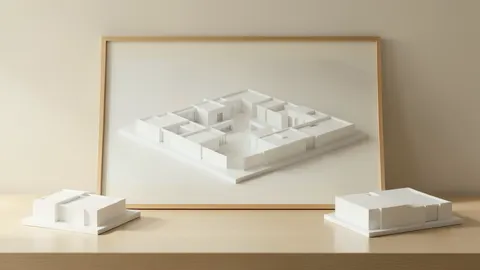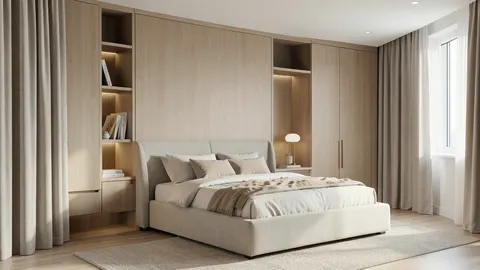
A home that reflects its occupants
A home's success is not solely visual. Space works better when it accommodates household routines, privacy, social interaction and memories. Design begins with understanding people and their daily activities before selecting furniture or colours.
Daylight, air and comfort
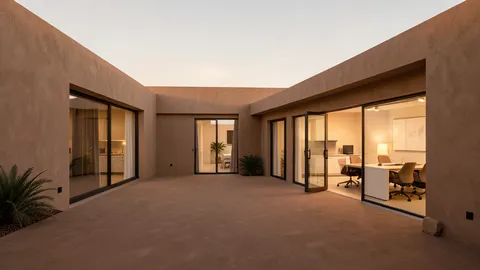
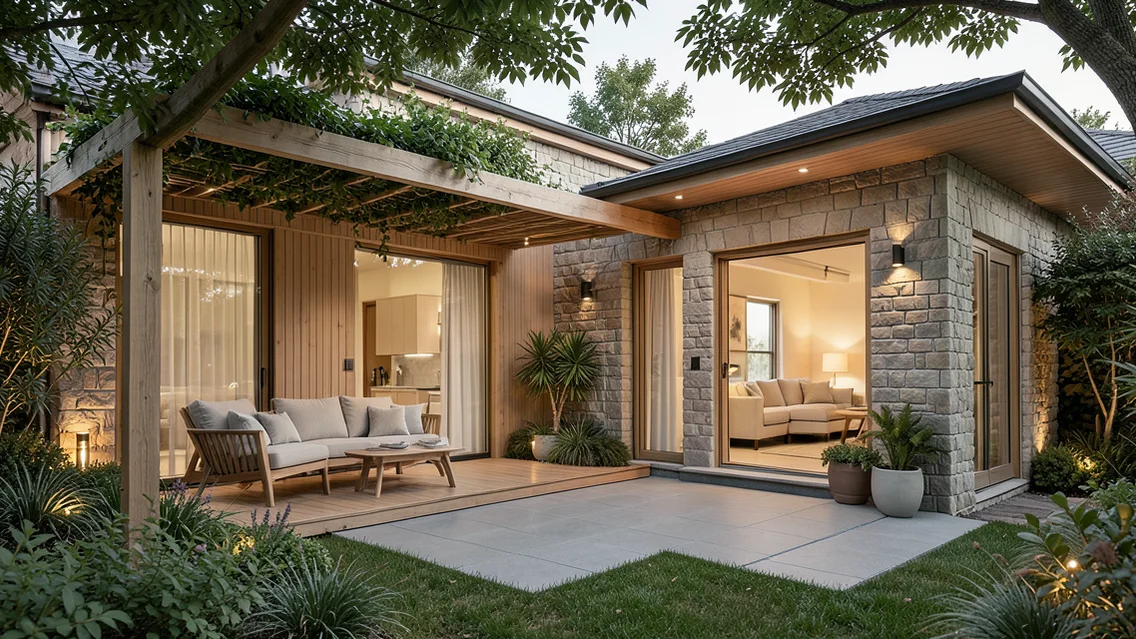
Openings, shading and spatial orientation influence daylight, thermal comfort and usability. There is no universal solution across climates and occupants. Assess daylight, ventilation, temperature, noise and privacy against the site and household requirements, comparing alternatives before construction.
Plants, colours and memories
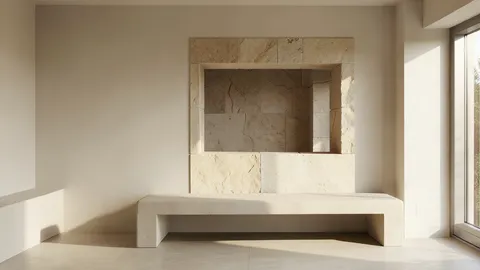
Natural elements, artwork and photographs can express occupants' identity. Select them according to preferences, maintenance, allergies and ease of movement. Do not present a colour or plant as treatment or a guarantee of happiness; explore and test users' preferences.
Understand occupants
Define requirements
Test alternatives
Learn after occupancy
Belonging and flexibility over time
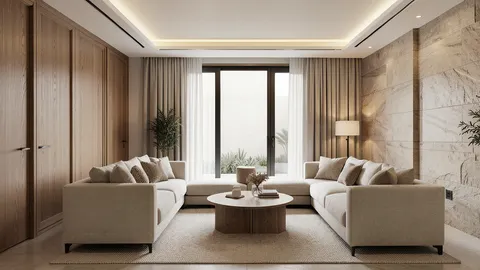
A room's use may change as households grow, people work from home or occupants age. Compare a multipurpose room with a fixed-function room: can furniture be rearranged or privacy introduced without compromising light and circulation? Review the occupied home to learn from actual use.
A visual reading of the article topic
- 01A home that reflects its occupants
- 02Daylight, air and comfort
- 03Plants, colours and memories
- 04Belonging and flexibility over time
Practical decision checklist
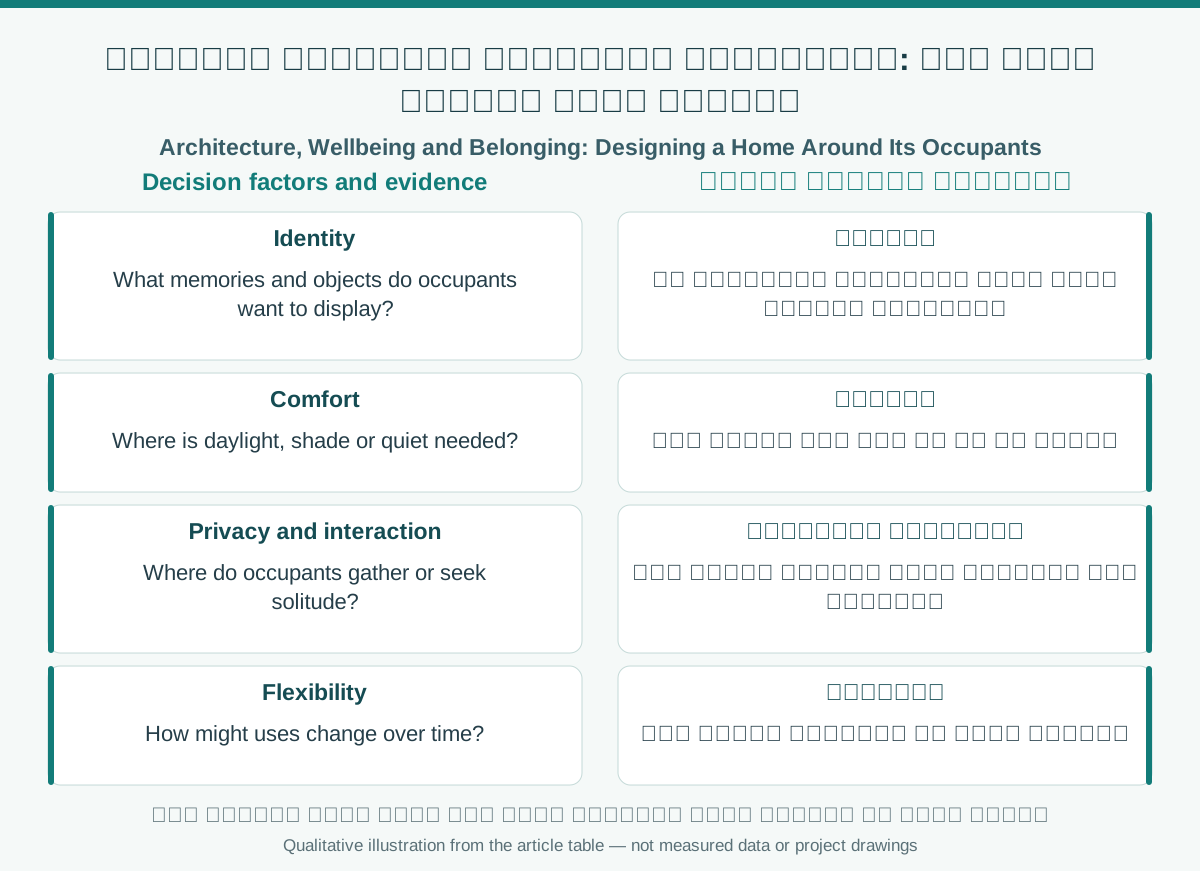
| Dimension | Briefing question |
|---|---|
| Identity | What memories and objects do occupants want to display? |
| Comfort | Where is daylight, shade or quiet needed? |
| Privacy and interaction | Where do occupants gather or seek solitude? |
| Flexibility | How might uses change over time? |
Decision pathway
- Understand occupants
- Define requirements
- Test alternatives
- Learn after occupancy
Scope and source
These are qualitative design considerations, not evidence of a causal psychological effect or a quantified increase in happiness.
Digital editorial expansion of the author's Knowledge Fragments, page 144. The previous source text is retained in the editorial record.
Topics and source excerpts
| Topic | Excerpt from article |
|---|---|
| A home that reflects its occupants | A home's success is not solely visual. |
| Daylight, air and comfort | Openings, shading and spatial orientation influence daylight, thermal comfort and usability. |
| Plants, colours and memories | Natural elements, artwork and photographs can express occupants' identity. |
| Belonging and flexibility over time | A room's use may change as households grow, people work from home or occupants age. |
| Decision pathway | Understand occupants |
| Scope and source | These are qualitative design considerations, not evidence of a causal psychological effect or a quantified increase in happiness. |
Source excerpts organized for comparison, not newly researched findings.
References and limitations
Review space, thermal comfort, safety and accessibility for occupants; this does not establish therapeutic effects of colors or plants.
The following references support selected topics in the article.
WHO Housing and Health Guidelines executive summary