Price is an outcome of a system
The article argues that affordability requires examining product type, location, income and finance rather than price alone. Available stock may not match target household budgets or sizes; establishing this requires disaggregated prices, contracts, inventory and household data. Higher prices alone do not establish a shortage of suitable homes.
Housing product and city design
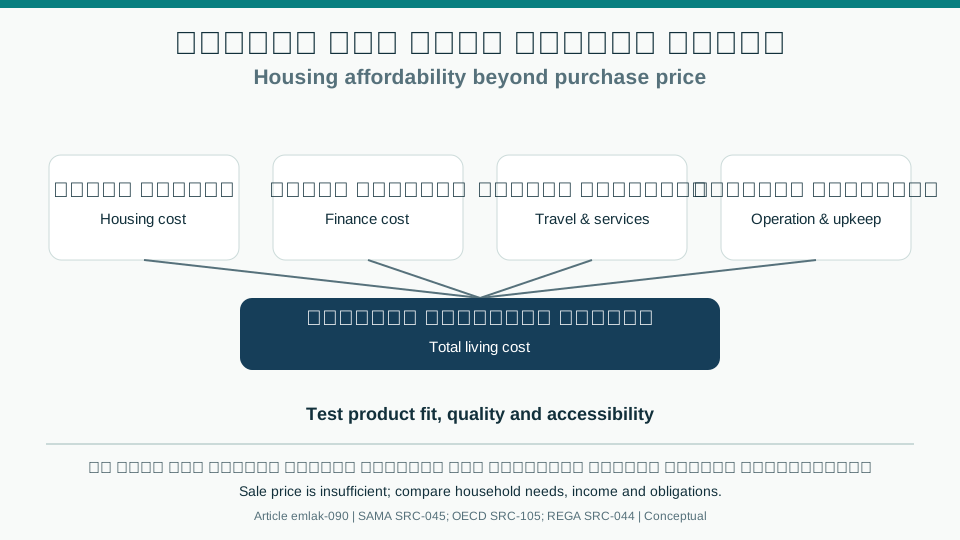
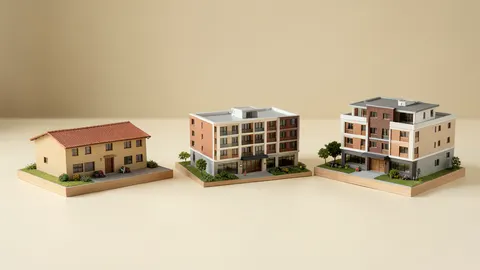
Test smaller and flexible units where they fit household needs, preserving functional quality, privacy and accessibility. Development outside traditional centers may offer lower prices, but account for transport, time, services and infrastructure; distance from employment can shift the burden from housing to travel. Compare total living costs across alternatives.
Finance, regulation and evaluation
Pricing, land-development and support policies can have different effects depending on design, scope and timing. Some measures may help households cope with short-term shocks, while longer-term supply, quality and investment viability need monitoring. Assess program eligibility and financing costs instead of assuming all support improves affordability. Establish measurable indicators before evaluating a policy or project.
Decision review table
| Factor | Evidence or action |
|---|---|
| Product fit | Household income, area and quality |
| Location | Time and cost of access to jobs and services |
| Finance | Down payment, total cost and affordability |
| Policy | Defined effects on supply, price and quality |
A visual reading of the article topic
- 01Price is an outcome of a system
- 02Housing product and city design
- 03Finance, regulation and evaluation
- 04Decision review table
Practical workflow
- 01 Diagnose supply mismatch
- 02 Test product and location
- 03 Compare total monthly cost
- 04 Monitor intervention outcomes
Conceptual editorial diagram; not measured data.
Topics and source excerpts
| Topic | Excerpt from article |
|---|---|
| Price is an outcome of a system | The article argues that affordability requires examining product type, location, income and finance rather than price alone. |
| Housing product and city design | Test smaller and flexible units where they fit household needs, preserving functional quality, privacy and accessibility. |
| Finance, regulation and evaluation | Pricing, land-development and support policies can have different effects depending on design, scope and timing. |
| Practical workflow | 01 Diagnose supply mismatch |
| Sources and limitations | Editorial development based on the author’s original Emlak article; previous text retained. |
Source excerpts organized for comparison, not newly researched findings.
Sources and limitations
Editorial development based on the author’s original Emlak article; previous text retained. Claims about 2024–2025 demand trends, price controls and land fees require verification against data and applicable rules. This is an analytical framework, not a categorical judgment on specific policies.
- SAMA: Responsible Lending Principles for Individual Customers — Total payable, variable term cost, obligations, disposable income and expenses in affordability assessment; quantitative limits and individual conditions require separate checks.
- OECD: Benchmarking Accessibility in Cities — Readable abstract supports the distinction between accessibility and proximity across travel modes; not local outcomes or causal price effects.
- REGA: Real Estate Indicators FAQ — Location, type and time filters and coverage limits; averages do not value a specific property.