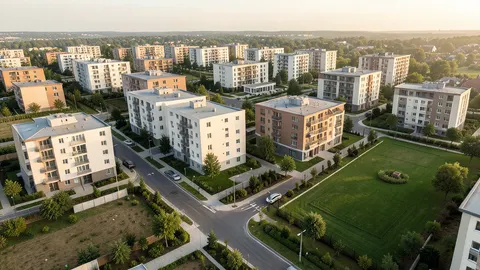
Centrality is not universal
The source explores housing and investment outside major cities. An independent regional city differs from a metropolitan suburb, and remote workers' needs differ from commuters'. Peripheral land is not invariably cheaper or more profitable.
Access and quality of life
Review roads, services, utilities and connectivity, distinguishing announced projects from operational ones. Measure travel time and cost and assess local air, privacy and climatic comfort. Avoid generalizing generational preferences without appropriate evidence; examine target households.
Testing feasibility
Compare acquisition, utility connections, maintenance and travel with potential net rent and resale liquidity. Review comparable transactions, marketing periods and vacancy; test delayed infrastructure or weak demand. A distant development does not guarantee appreciation.
Decision review table
| Factor | Evidence to check |
|---|---|
| Housing | Space, comfort, services |
| Access | Time and cost |
| Operations | Connections, maintenance, fees |
| Market | Sales, liquidity and demand |
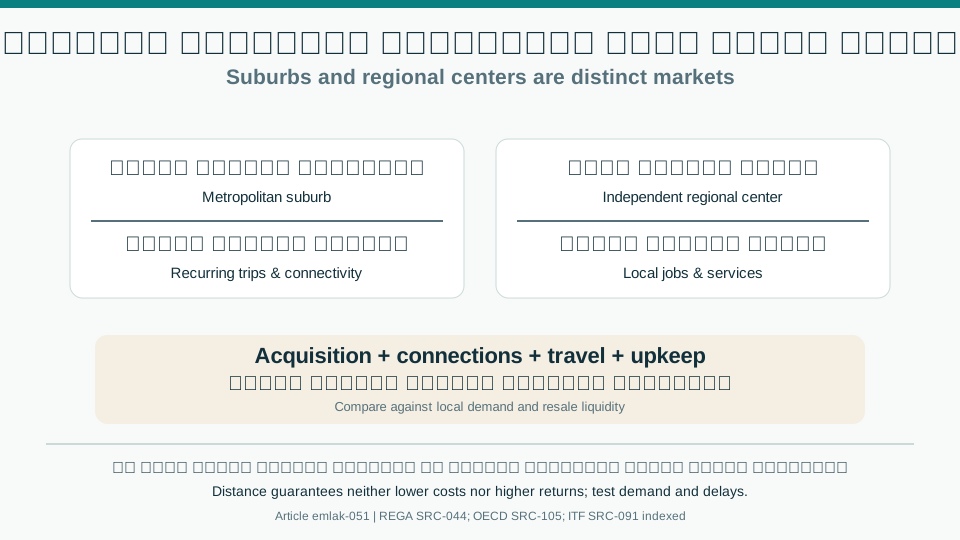
A visual reading of the article topic
- 01Centrality is not universal
- 02Access and quality of life
- 03Testing feasibility
- 04Decision review table
Practical workflow
- Define area
- Test access
- Compare demand and costs
- Stress-test risks
References and limitations
Topics and source excerpts
| Topic | Excerpt from article |
|---|---|
| Centrality is not universal | The source explores housing and investment outside major cities. |
| Access and quality of life | Review roads, services, utilities and connectivity, distinguishing announced projects from operational ones. |
| Testing feasibility | Compare acquisition, utility connections, maintenance and travel with potential net rent and resale liquidity. |
| References and limitations | Editorial expansion of the author's Emlak contribution; the previous text is retained. |
Source excerpts organized for comparison, not newly researched findings.
Editorial expansion of the author's Emlak contribution; the previous text is retained. The historical trends are not a verified survey of generational preferences or suburban returns.
- ITF: What is the Urban Access Framework? — Indexed text distinguishing time-and-mode accessibility from distance-based proximity; European study, not Saudi price premiums or outcomes.
- REGA: Real Estate Indicators FAQ — Location, type and time filters and coverage limits; averages do not value a specific property.
- OECD: Benchmarking Accessibility in Cities — Readable abstract supports the distinction between accessibility and proximity across travel modes; not local outcomes or causal price effects.