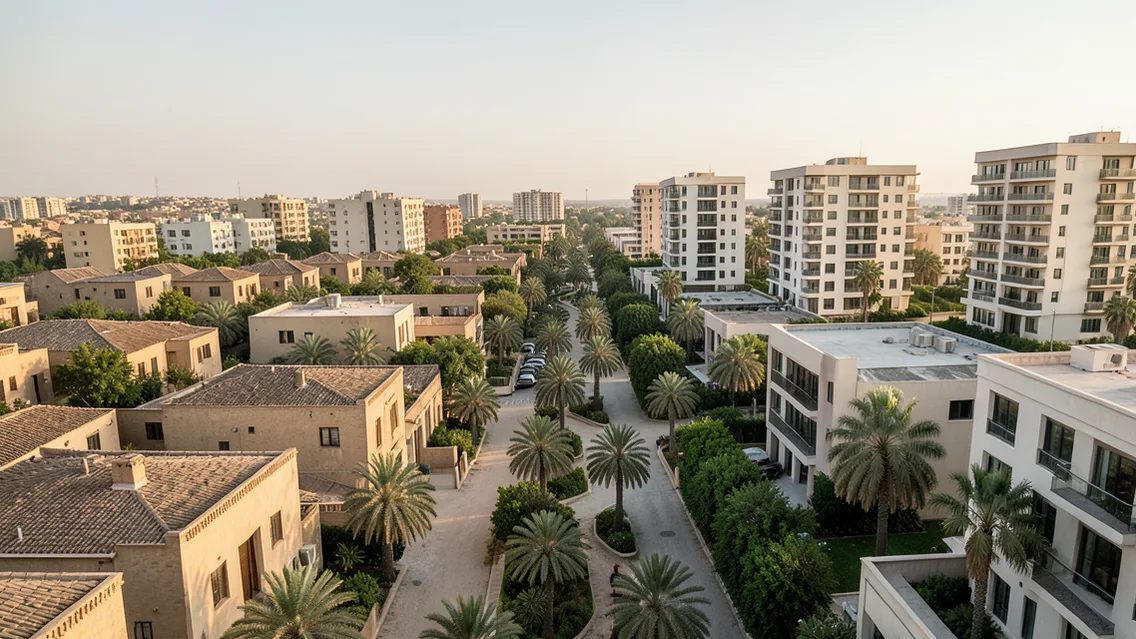
Density and accessibility
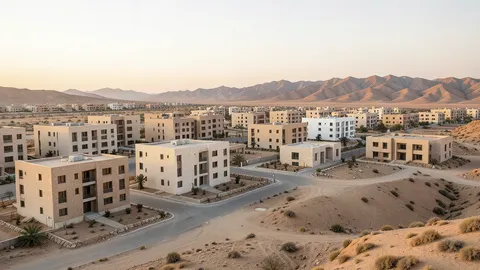
Project location and density influence the distribution of residents, jobs and daily trips. Mixed-use development can bring housing closer to services and employment, but success is not automatic. Connected walkways, suitable transport, accessible services and considered density are necessary. Test travel times and infrastructure capacity before approval.
Urban regeneration and local economy
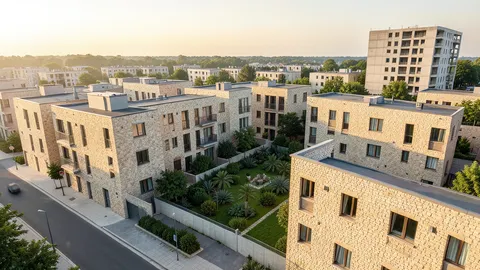
Neighborhood redevelopment may revitalize buildings and public spaces and attract activity and investment. It may also bring rent pressure or displacement of residents and businesses. Compare housing availability, retention of local activity, public-space quality and jobs before and after development rather than land value alone.
A sustainable, operable city
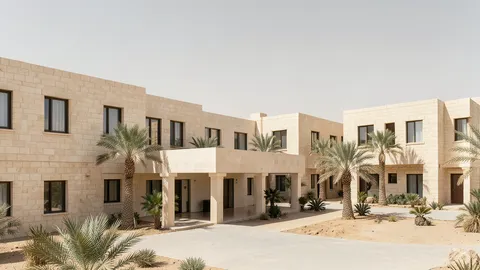
Sustainability goes beyond smart systems to climate-responsive design, water and energy management, walkability and long-term maintenance. Connect project decisions to city plans and infrastructure, and evaluate outcomes after occupancy. Sustainable real estate value requires balancing economic feasibility, quality of life and affordability.
Decision review table
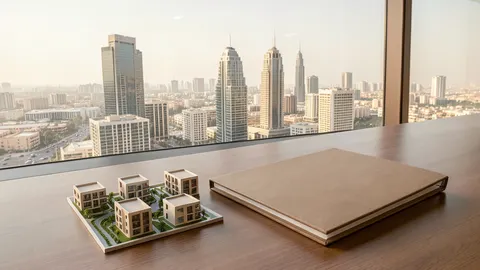
| Factor | Evidence or action |
|---|---|
| Density | Service capacity and access time |
| Land uses | Service mix and pedestrian connections |
| Regeneration | Resident and business retention |
| Sustainability | Resource and maintenance performance |
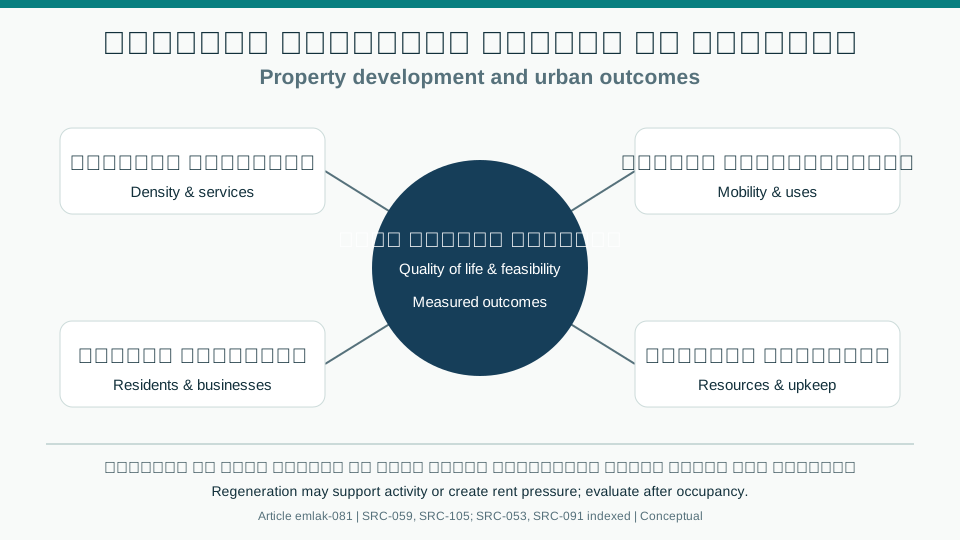
A visual reading of the article topic
- 01Density and accessibility
- 02Urban regeneration and local economy
- 03A sustainable, operable city
- 04Decision review table
Practical workflow
- 01 Analyze site
- 02 Identify community needs
- 03 Balance project indicators
- 04 Evaluate post-occupancy outcomes
Conceptual editorial diagram; not measured data.
Topics and source excerpts
| Topic | Excerpt from article |
|---|---|
| Density and accessibility | Project location and density influence the distribution of residents, jobs and daily trips. |
| Urban regeneration and local economy | Neighborhood redevelopment may revitalize buildings and public spaces and attract activity and investment. |
| A sustainable, operable city | Sustainability goes beyond smart systems to climate-responsive design, water and energy management, walkability and long-term maintenance. |
| Sources and limitations | Editorial development based on the author's original Emlak article; previous text retained. |
Source excerpts organized for comparison, not newly researched findings.
Sources and limitations
Editorial development based on the author's original Emlak article; previous text retained. The impacts are conditional on context; price increases or trip reductions should not be assumed without local measurement.
- ITF: What is the Urban Access Framework? — Indexed text distinguishing time-and-mode accessibility from distance-based proximity; European study, not Saudi price premiums or outcomes.
- WBDG: Architectural Programming — Indexed corroboration of goals, functions, activities, costs and timing; staging link stability unconfirmed, prefer complementary readable sources. No universal psychological or sales effect established.
- AIA: A Problem Well Stated — Owner Project Requirements — Practitioner guidance on brief, site, function, performance and cost; not code approval or a guarantee of project outcomes.
- OECD: Benchmarking Accessibility in Cities — Readable abstract supports the distinction between accessibility and proximity across travel modes; not local outcomes or causal price effects.