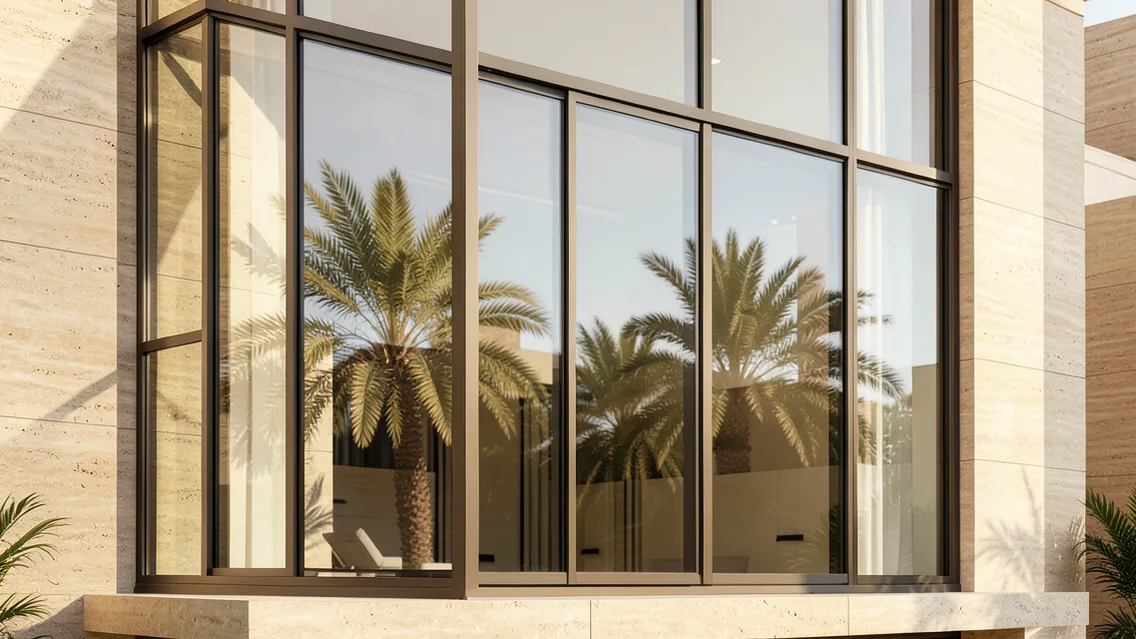
Systems and profiles
The source covers standard aluminum, thermally broken profiles and cladding. Window and door profiles differ from cladding panels in function and should not be compared as equivalent products. Thermal breaks can reduce frame conduction, but actual performance depends on glass, spacers, seals, installation and leakage. Establish loads, openings, operating type, movement, sun, dust, moisture and hardware corrosion and request whole-system documentation.
Glazing, performance and safety
Single, double and triple units differ in insulation, weight, solar heat gain and daylight according to thicknesses, gaps and coatings. Triple glazing is not automatically cost-effective in every climate; compare thermal transmittance, solar gain, light and visibility with cost. Tempered and laminated glass differ in breakage behavior; use, location, safety and fire requirements determine the appropriate product. Professional design checks wind loads, glazing support, drainage and material compatibility.
Windows, installation and acceptance
Compare sliding, hinged, fixed and other windows for operation, ventilation, leakage, cleaning, access and security rather than appearance alone. Review openings, dimensions, perimeter sealing, frame fixing, joints and drainage before fabrication. Request relevant air, water and load tests where specified, then inspect operation, closure, seals, glass and joints after fitting. Compare dated offers on equivalent specifications, dimensions, installation and warranty.
Comparison and verification table
| Factor | Evidence or action |
|---|---|
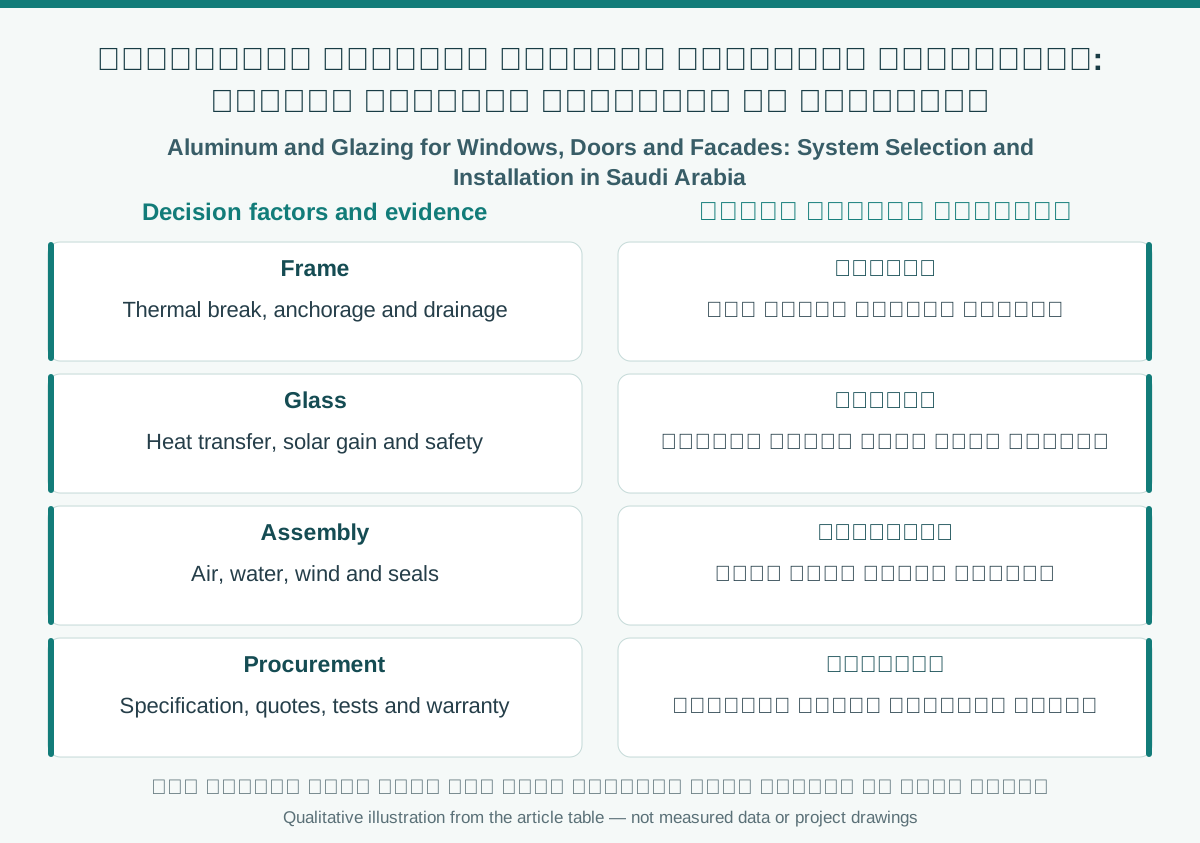
| Frame | Thermal break, anchorage and drainage |
| Glass | Heat transfer, solar gain and safety |
| Assembly | Air, water, wind and seals |
| Procurement | Specification, quotes, tests and warranty |
A visual reading of the article topic
- 01Systems and profiles
- 02Glazing, performance and safety
- 03Windows, installation and acceptance
- 04Comparison and verification table
Practical workflow
- 01 Define opening performance
- 02 Compare assemblies and glazing
- 03 Review details and testing
- 04 Inspect installation and operation
Conceptual editorial diagram; not measured data.
Sources and limitations
Editorial adaptation based on the original WordPress archive; original source retained separately. 2026 prices, insulation problem percentages and absolute material-life claims require independent verification; no figures or safety classification are adopted without documentation.
Topics and source excerpts
| Topic | Excerpt from article |
|---|---|
| Systems and profiles | The source covers standard aluminum, thermally broken profiles and cladding. |
| Glazing, performance and safety | Single, double and triple units differ in insulation, weight, solar heat gain and daylight according to thicknesses, gaps and coatings. |
| Windows, installation and acceptance | Compare sliding, hinged, fixed and other windows for operation, ventilation, leakage, cleaning, access and security rather than appearance alone. |
| Practical workflow | 01 Define opening performance |
| Sources and limitations | Editorial adaptation based on the original WordPress archive; original source retained separately. |
| References and limitations | Compare aluminum and glazing systems using complete-assembly thermal, daylight and leakage criteria. |
Source excerpts organized for comparison, not newly researched findings.
References and limitations
Compare aluminum and glazing systems using complete-assembly thermal, daylight and leakage criteria. Verify safety-glazing type, anchorage and drainage for the use location.
The following references support selected topics in the article.
- US DOE FEMP – Purchasing Energy-Efficient Residential Windows, Doors, and Skylights
- UL Solutions – Doors, Windows and Related Hardware Application Guide
- WBDG – Moisture Management
- Saudi Code for Energy Conservation – Residential Building (SBC 602), 2024 catalogue
- Saudi Fire Protection Code (SBC 801), 2024 catalogue