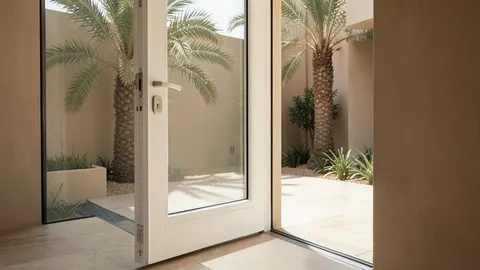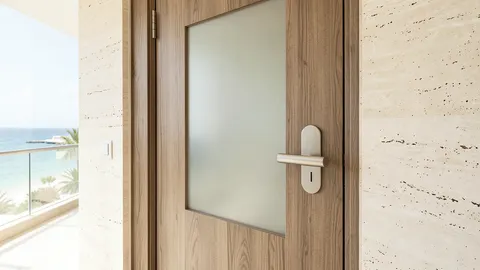
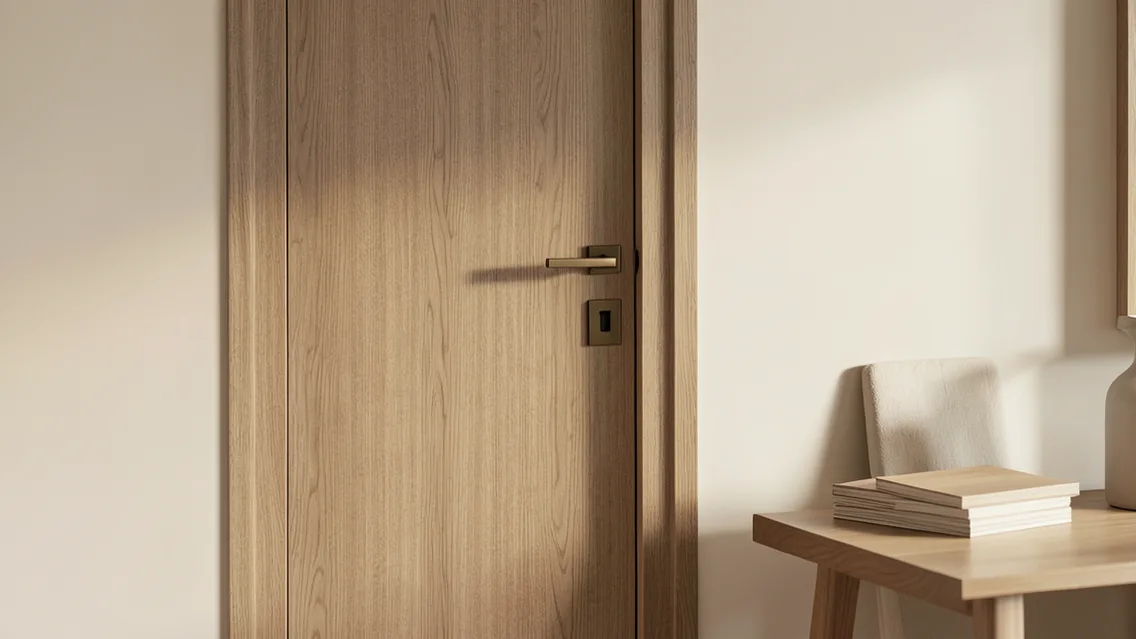
What are WPC doors?
WPC refers to composites combining wood-based components or fibers with polymers and additives. Formulations, manufacturing and door construction vary. Some systems may absorb less moisture than certain wood alternatives, but not all are waterproof, dimensionally stable or fire-resistant. The leaf, frame, edges, hinges, locks and seals form an assembly whose overall performance matters.
Application and properties
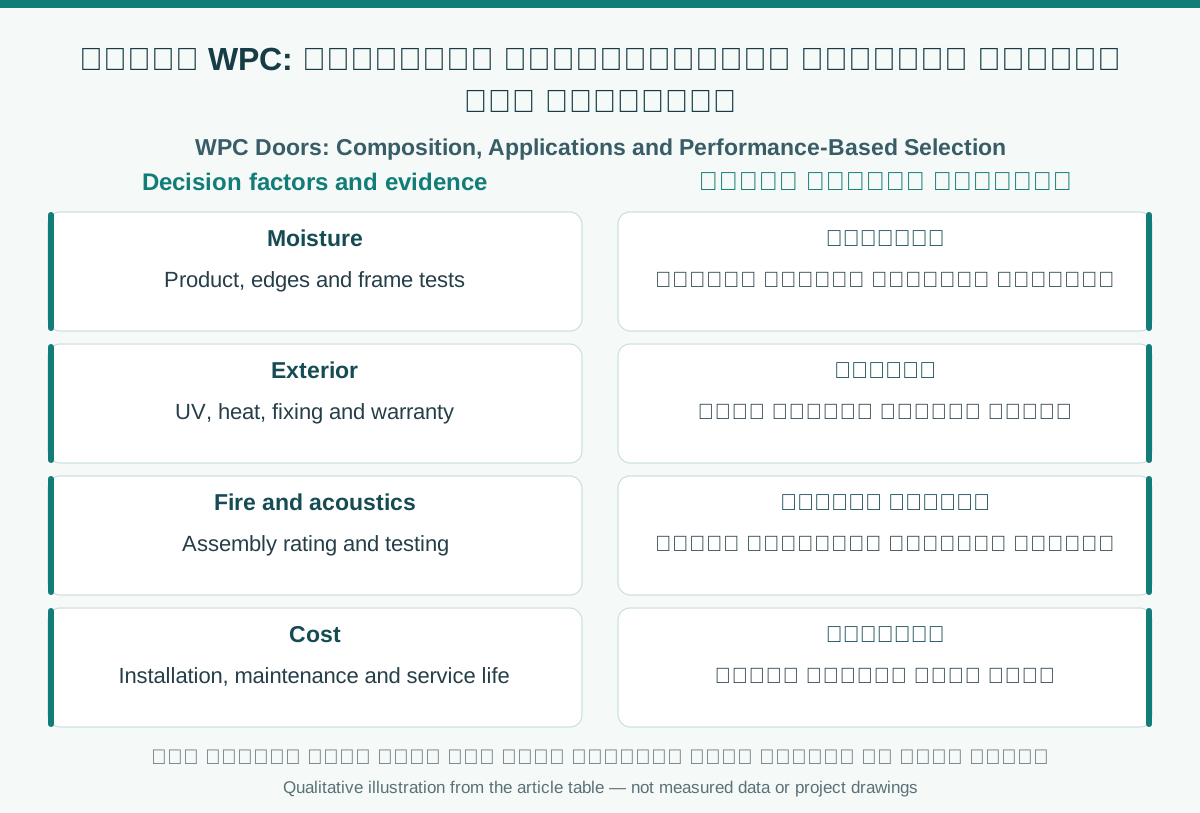
Approved products may suit bathrooms, kitchens and interior doors in some residential and commercial projects. For exterior use, check UV, heat, rain, dimensional change, anchorage and exposure-specific warranties. A fire-resistant marketing claim is insufficient: where a fire-rated door is required, verify the classification of the complete assembly against applicable requirements. Check acoustic privacy, durability and maintenance using suitable tests rather than material name alone.
Comparison, procurement and sustainability
Compare WPC, wood, PVC, metal and composite alternatives by function, service life, installation, maintenance, scratch repair and hardware replacement. Request product data, finish samples, frame and joint details and painting or color-change limitations. Recycled content does not automatically prove low environmental impact; evaluate sourcing, production, service life and end-of-life with comparable data. Approve size, handing, operation and post-installation inspection.
Comparison and verification table
| Factor | Evidence or action |
|---|---|
| Moisture | Product, edges and frame tests |
| Exterior | UV, heat, fixing and warranty |
| Fire and acoustics | Assembly rating and testing |
| Cost | Installation, maintenance and service life |
A visual reading of the article topic
- 01What are WPC doors?
- 02Application and properties
- 03Comparison, procurement and sustainability
- 04Comparison and verification table
Practical workflow
- 01 Define door function and exposure
- 02 Request evidence and sample
- 03 Compare equivalent requirements
- 04 Inspect installation and operation
Conceptual editorial diagram; not measured data.
Sources and limitations
Editorial adaptation based on the original WordPress archive; original source retained separately. Historical composition percentages, prices and fire, water, pest and sustainability claims are not universal verified properties; check the specific product.
Topics and source excerpts
| Topic | Excerpt from article |
|---|---|
| What are WPC doors? | WPC refers to composites combining wood-based components or fibers with polymers and additives. |
| Application and properties | Approved products may suit bathrooms, kitchens and interior doors in some residential and commercial projects. |
| Comparison, procurement and sustainability | Compare WPC, wood, PVC, metal and composite alternatives by function, service life, installation, maintenance, scratch repair and hardware replacement. |
| Practical workflow | 01 Define door function and exposure |
| Sources and limitations | Editorial adaptation based on the original WordPress archive; original source retained separately. |
| References and limitations | WPC material studies show formulation- and exposure-dependent moisture and weathering behavior; they do not certify doors. |
Source excerpts organized for comparison, not newly researched findings.
References and limitations
WPC material studies show formulation- and exposure-dependent moisture and weathering behavior; they do not certify doors. Verify the fire-rated assembly where required and assess environmental impact over the life cycle.
The following references support selected topics in the article.
- Segerholm, Ibach & Wålinder (2012) – Moisture Sorption in Artificially aged wood-plastic composites
- Chen et al. (2016) – Weathering characteristics of wood plastic composites reinforced with extracted or delignified wood flour
- UL Solutions – Doors, Windows and Related Hardware Application Guide
- US EPA – Sustainable Materials Management Basics
- Saudi Fire Protection Code (SBC 801), 2024 catalogue