Why is underwater placement different?
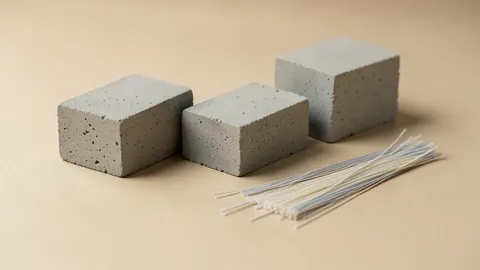
The source discusses cement paste washing out when fresh concrete contacts water, causing segregation, turbidity and loss of uniformity. Portland cement selection alone does not prevent washout; a mix needs suitable aggregate grading, cohesion and stable workability, and may require anti-washout admixtures after compatibility checks and trials. Washout resistance differs from hardened-concrete durability under marine or sulfate exposure; each requires its own design and testing.
Choose a placement method
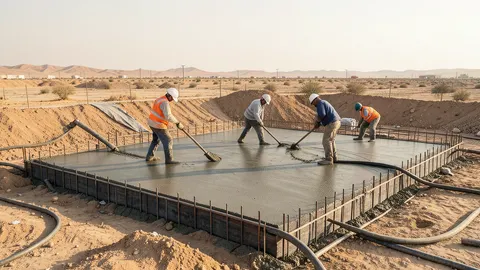
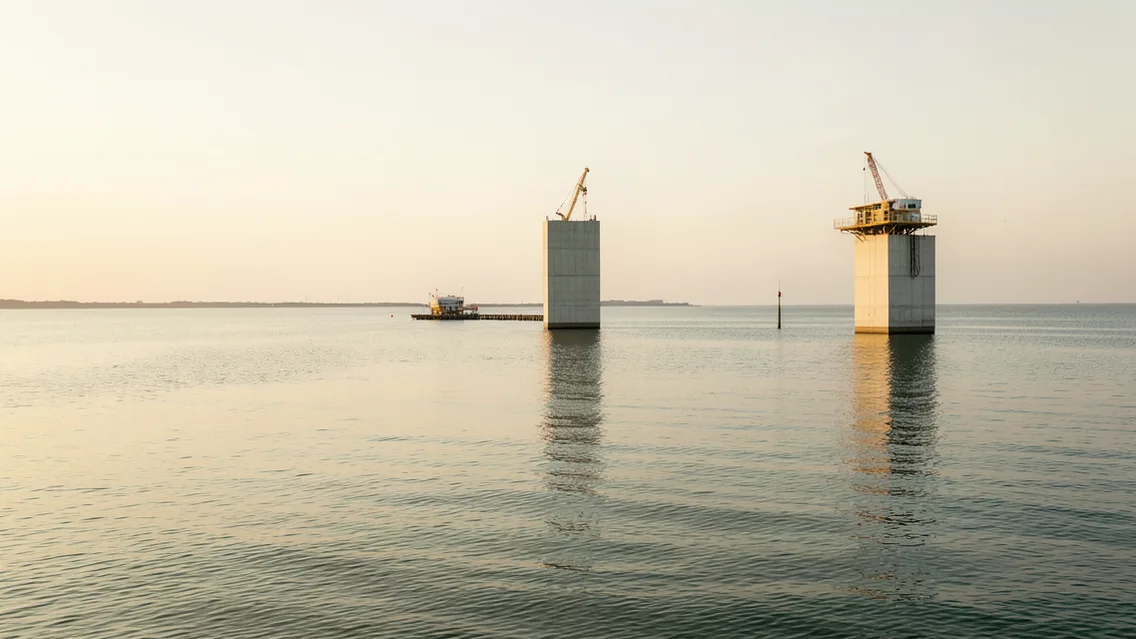
The source discusses hoppers, pipes, pumping, buckets and bags. Tremie placement conveys concrete to the placement zone in a system designed to limit mixing with water; continuity and outlet embedment are controlled under an approved procedure. Pumping, precast elements or a water-excluded enclosure may suit different circumstances. Buckets and bags are special applications, not equivalent substitutes for structural placement without engineering verification. Current, access, depth and member geometry influence the choice.
Bridges, dams and quality control
Bridge foundations and marine structures may use cast-in-place methods, precast elements or temporary isolation; no single method applies at every depth. For mass concrete, including some dams, hydration heat, thermal gradients and construction sequencing need assessment distinct from washout. Quality control includes mix approval, trials, placement method, fresh-property checks, continuity, washout indicators and hardened-concrete verification to specifications. Specialist teams also address aquatic environmental protection and personnel safety.
Comparison and verification table
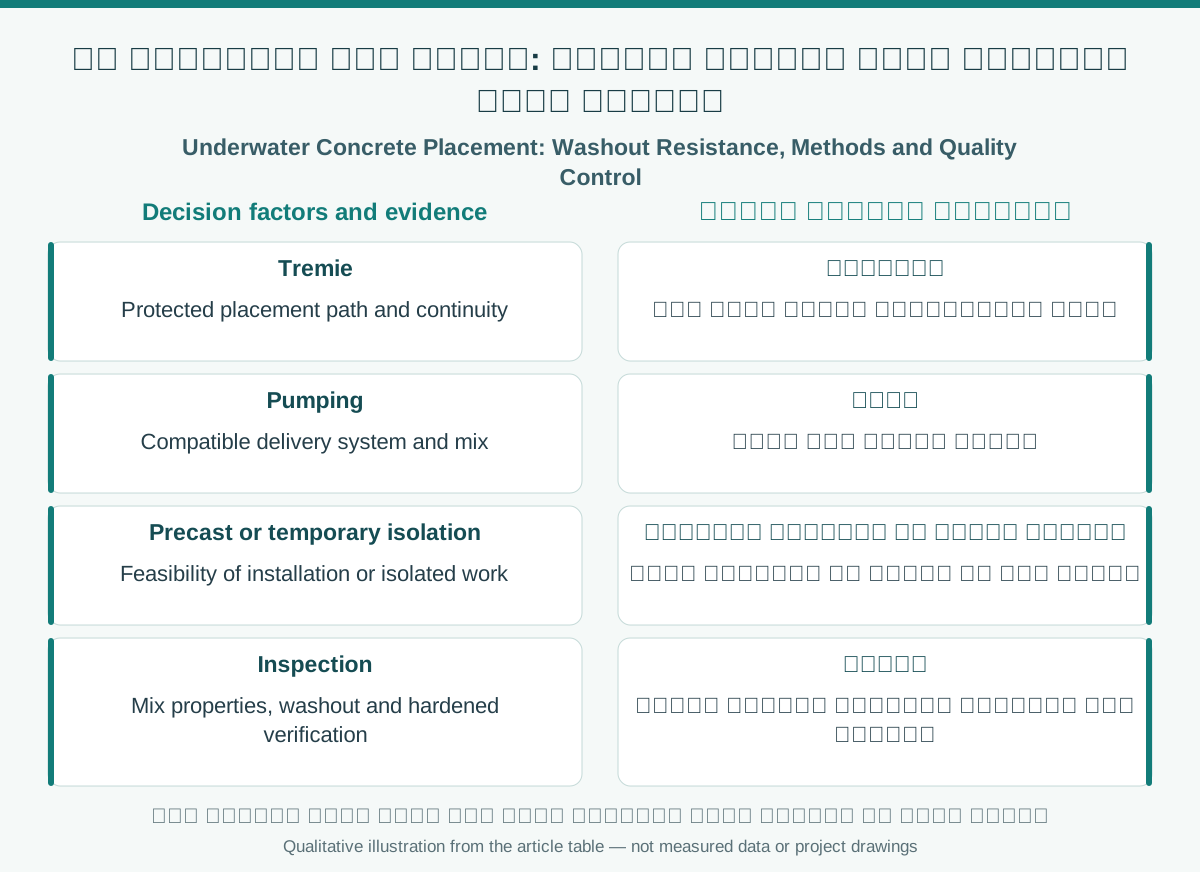
| Factor | Evidence or action |
|---|---|
| Tremie | Protected placement path and continuity |
| Pumping | Compatible delivery system and mix |
| Precast or temporary isolation | Feasibility of installation or isolated work |
| Inspection | Mix properties, washout and hardened verification |
A visual reading of the article topic
- 01Why is underwater placement different?
- 02Choose a placement method
- 03Bridges, dams and quality control
- 04Comparison and verification table
Practical workflow
- 01 Define exposure and water conditions
- 02 Approve mix and method through trials
- 03 Monitor continuity and washout
- 04 Verify concrete and environmental outcomes
Conceptual editorial diagram; not measured data.
Sources and limitations
Editorial adaptation based on the original WordPress archive; original source retained separately. Aggregate percentages, dam lift-height limits and cement descriptions in the 2021 source require scientific review and are not adopted as execution values. This article is not a method statement or hydraulic structure design.
Topics and source excerpts
| Topic | Excerpt from article |
|---|---|
| Why is underwater placement different? | The source discusses cement paste washing out when fresh concrete contacts water, causing segregation, turbidity and loss of uniformity. |
| Choose a placement method | The source discusses hoppers, pipes, pumping, buckets and bags. |
| Bridges, dams and quality control | Bridge foundations and marine structures may use cast-in-place methods, precast elements or temporary isolation; no single method applies at every depth. |
| Practical workflow | 01 Define exposure and water conditions |
| Sources and limitations | Editorial adaptation based on the original WordPress archive; original source retained separately. |
| References and limitations | ACI publications document tremie placement and risks of cement washout, segregation and water entrapment. |
Source excerpts organized for comparison, not newly researched findings.
References and limitations
ACI publications document tremie placement and risks of cement washout, segregation and water entrapment. Historical research is not an approved current-project mix or placement procedure.
The following references support selected topics in the article.
- Gerwick (1964), Placement of Tremie Concrete
- Yao and Gerwick (2004), Underwater Concrete Part 2: Proper Mixture Proportioning
- Saudi Code for Concrete Structures SBC 304 (2024)