Sustainability as a shared challenge
The article begins with climate and resource challenges and architects’ potential contribution to sustainability education for all students, not architecture alone. The built environment illustrates links between energy, water, materials, health and economics. A curriculum can begin with a decision’s effects on users, communities and the environment over time rather than isolating sustainability in one theoretical course.
Connecting design and disciplines
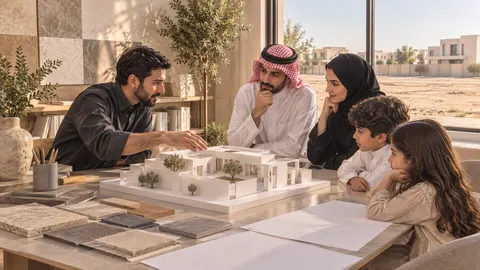
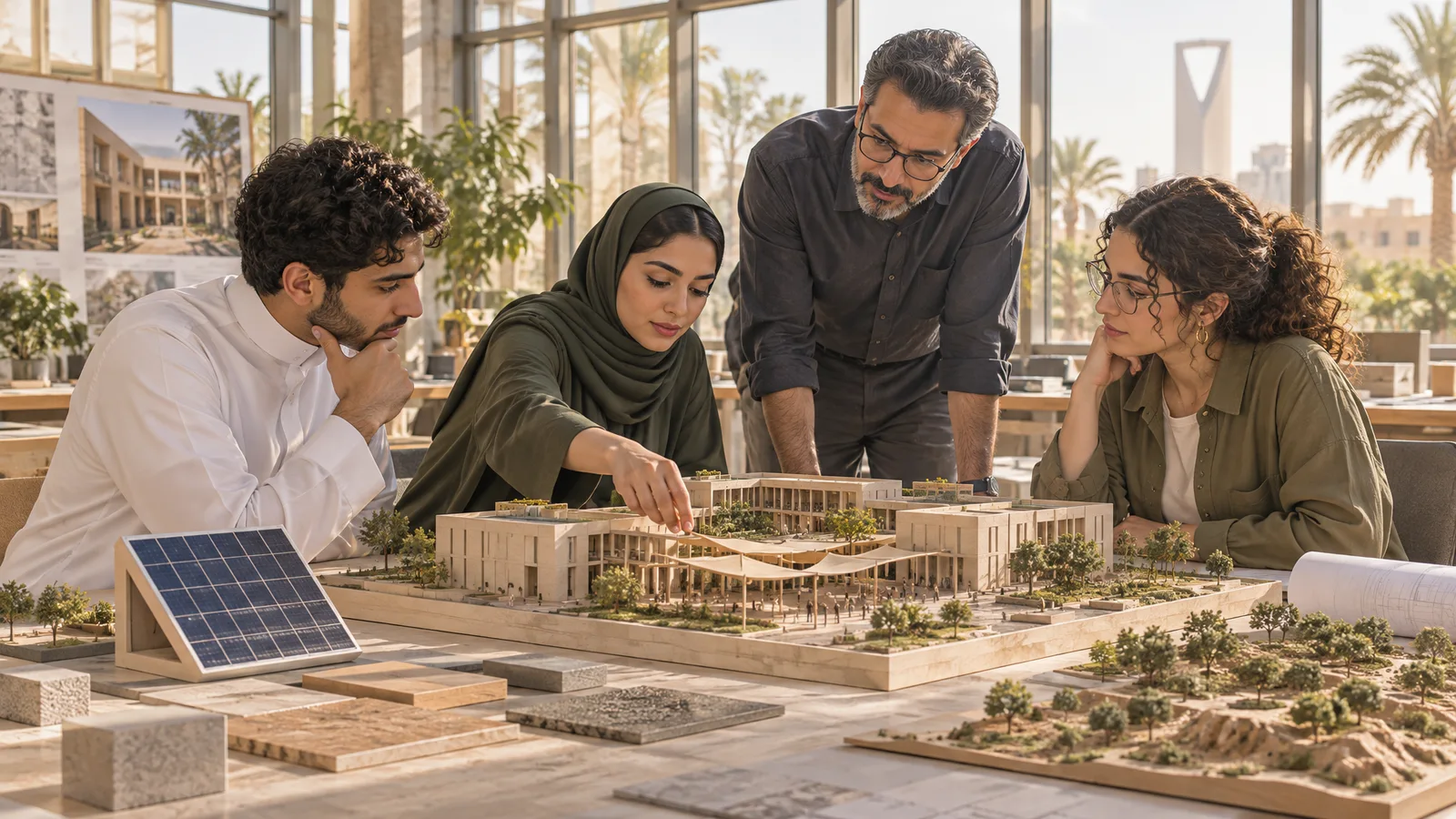
A joint studio can bring architecture, engineering, environmental science and economics together to analyze a real or hypothetical building. Students establish boundaries, climate data and needs, then compare envelope, material and operating alternatives with shared metrics. Collaboration reveals trade-offs: lower energy use may come with maintenance or comfort implications.
Assessing learning and feasibility
Ask students to justify alternatives, disclose data limitations and explain life-cycle costs rather than merely produce attractive images. Assess systems understanding, analysis, teamwork and communication with non-specialists through a common rubric. Compare student work before and after a curriculum pilot under consistent criteria, improving the curriculum through evidence.
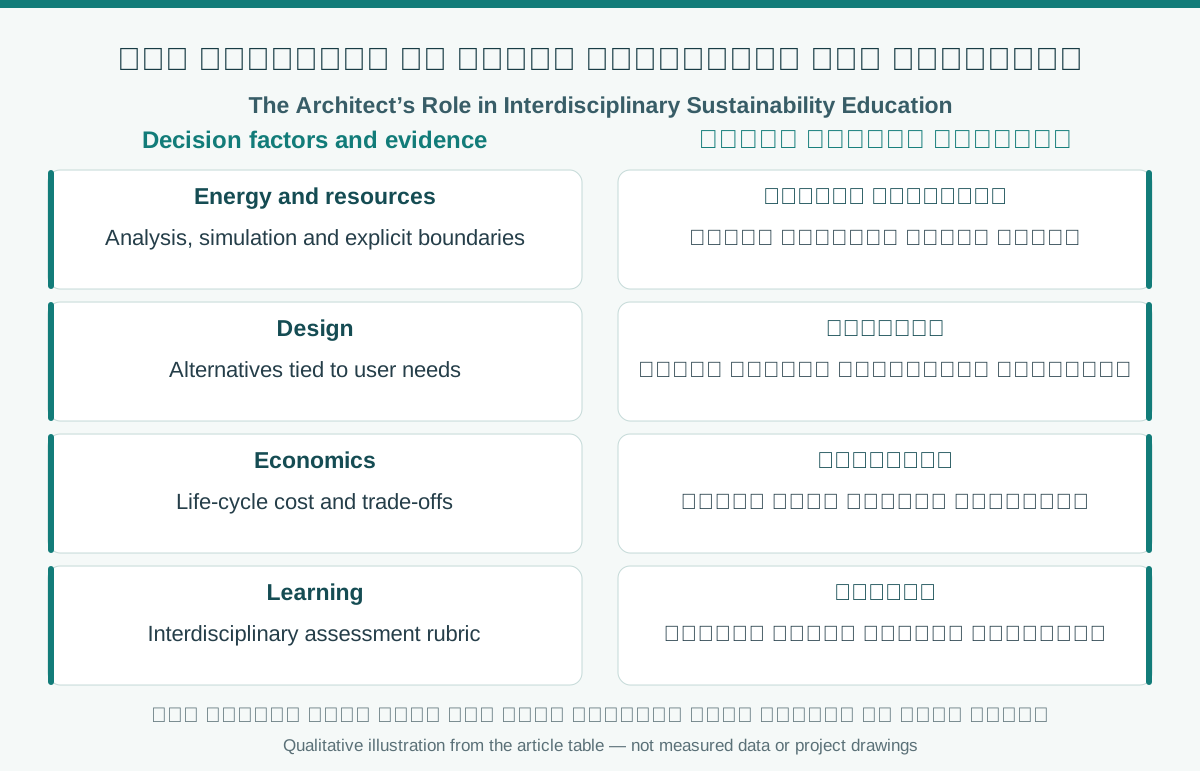
Decision review table
| Factor | Evidence or action |
|---|---|
| Energy and resources | Analysis, simulation and explicit boundaries |
| Design | Alternatives tied to user needs |
| Economics | Life-cycle cost and trade-offs |
| Learning | Interdisciplinary assessment rubric |
A visual reading of the article topic
- 01Sustainability as a shared challenge
- 02Connecting design and disciplines
- 03Assessing learning and feasibility
- 04Decision review table
Practical workflow
- 01 Define learning outcomes
- 02 Design joint project
- 03 Compare alternatives
- 04 Evaluate and refine curriculum
Conceptual editorial diagram; not measured data.
Sources and limitations
Editorial adaptation based on the original WordPress archive; original source retained separately. This is an educational proposal based on a historical article, not an empirical evaluation of a specific university. Specific climate and education claims require appropriate references.
Topics and source excerpts
| Topic | Excerpt from article |
|---|---|
| Sustainability as a shared challenge | The article begins with climate and resource challenges and architects’ potential contribution to sustainability education for all students, not architectu… |
| Connecting design and disciplines | A joint studio can bring architecture, engineering, environmental science and economics together to analyze a real or hypothetical building. |
| Assessing learning and feasibility | Ask students to justify alternatives, disclose data limitations and explain life-cycle costs rather than merely produce attractive images. |
| Practical workflow | 01 Define learning outcomes |
| Sources and limitations | Editorial adaptation based on the original WordPress archive; original source retained separately. |
| References and limitations | UNESCO supports contextual sustainability learning linking knowledge and action; building models can compare options under consistent inputs. |
Source excerpts organized for comparison, not newly researched findings.
References and limitations
UNESCO supports contextual sustainability learning linking knowledge and action; building models can compare options under consistent inputs. Assess reasoning and evidence rather than imagery alone.
The following references support selected topics in the article.
- UNESCO Education for sustainable development: what you need to know
- UNESCO Assessing learning in education for sustainable development (2026)
- DOE About Building Energy Modeling