Why appearance is not enough
Buying a home is a long-term financial and architectural decision. Attractive finishes may conceal water ingress, poorly functioning air conditioning or damage to structural elements. Their causes cannot be established by appearance alone. Distinguish what you have seen, what has been tested and what remains unknown.
Three levels of inspection
A visual inspection records the condition of ceilings, walls, floors and finishes. Functional inspection examines systems that can safely be tested within an agreed scope, such as electrical, plumbing, HVAC, drainage and waterproofing systems. A specialist determines the detailed tests required when warning signs warrant investigation. A limited inspection cannot rule out concealed defects.
From observation to evidence
Record each observation with a photograph, location and date. For example, a damp patch near a window might involve external water, condensation or another cause; its colour alone cannot establish cause or repair cost. Ask the specialist to explain available tests, evidence supporting likely causes and anything requiring further access or investigation.
Observe
Test
Document
Make an evidence-based decision
Using the inspection report
Request a report stating scope, limitations, priority defects and recommended actions. Separate documented repair estimates from assumptions and avoid combining non-comparable quotations. Review ownership costs and negotiate on evidence once potential obligations are understood, keeping legal and ownership checks separate from technical inspection.
A visual reading of the article topic
- 01Why appearance is not enough
- 02Three levels of inspection
- 03From observation to evidence
- 04Using the inspection report
Practical decision checklist
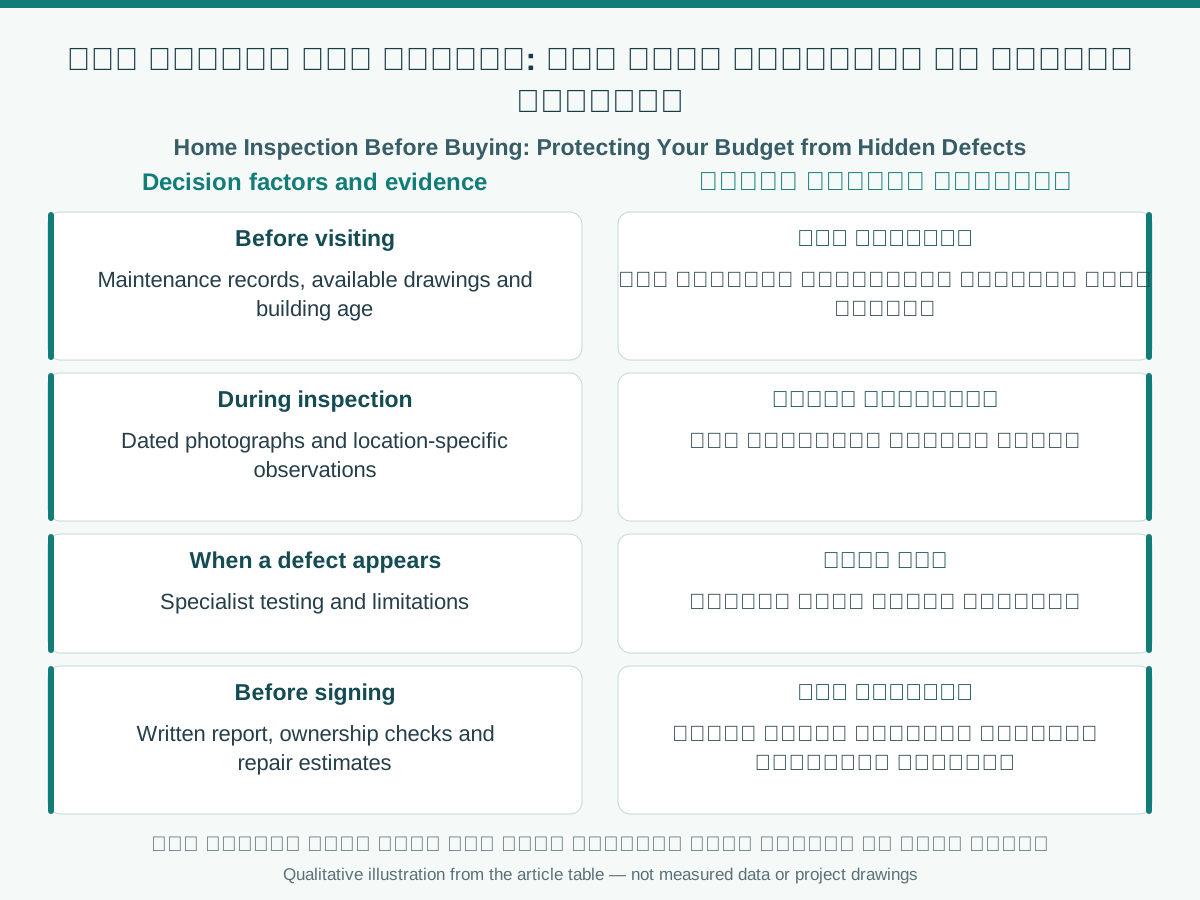
| Stage | Decision evidence |
|---|---|
| Before visiting | Maintenance records, available drawings and building age |
| During inspection | Dated photographs and location-specific observations |
| When a defect appears | Specialist testing and limitations |
| Before signing | Written report, ownership checks and repair estimates |
Decision pathway
- Observe
- Test
- Document
- Make an evidence-based decision
Scope and source
Inspection does not guarantee the absence of defects; cracking or foundation integrity cannot be established without appropriate investigation.
Digital editorial expansion of the author's Knowledge Fragments, page 18. The previous source text is retained in the editorial record.
Topics and source excerpts
| Topic | Excerpt from article |
|---|---|
| Why appearance is not enough | Buying a home is a long-term financial and architectural decision. |
| Three levels of inspection | A visual inspection records the condition of ceilings, walls, floors and finishes. |
| From observation to evidence | Record each observation with a photograph, location and date. |
| Using the inspection report | Request a report stating scope, limitations, priority defects and recommended actions. |
| Scope and source | Inspection does not guarantee the absence of defects; cracking or foundation integrity cannot be established without appropriate investigation. |
| References and limitations | Inspection documents accessible components and normal operation within a defined scope and written report; concealed defects may remain. |
Source excerpts organized for comparison, not newly researched findings.
References and limitations
Inspection documents accessible components and normal operation within a defined scope and written report; concealed defects may remain.
The following references support selected topics in the article.
ASHI Standard of Practice