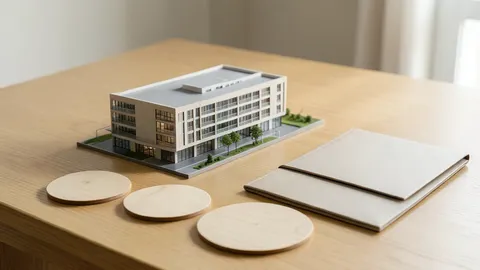
Product and audience definition
Entertainment real estate includes resorts, complexes, parks, sport, cultural and artistic facilities. The article links these assets with quality of life and economic diversification. Before defining scale, distinguish local visitors from tourists and assess catchment, income, repeat visits and competition. Population alone does not establish paying demand.
Designing an operable experience
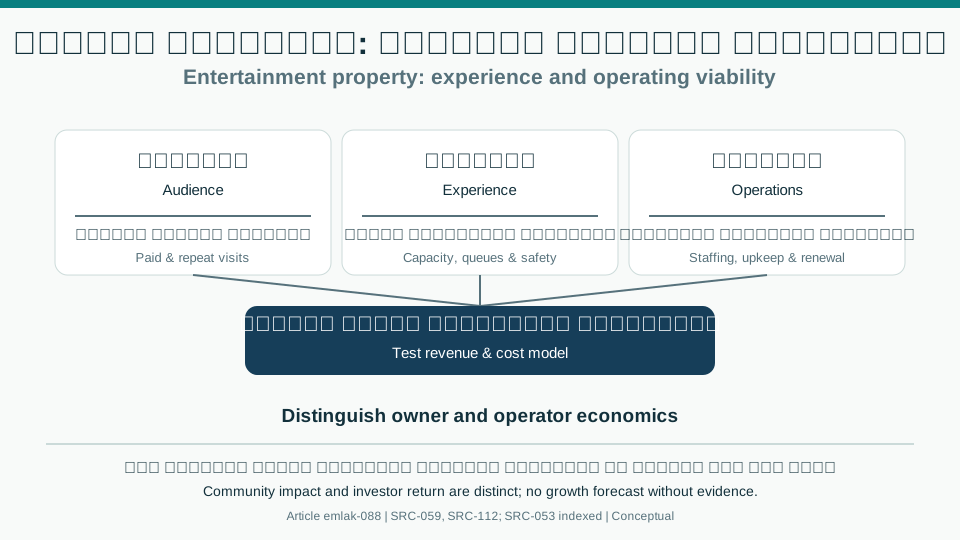
Experience depends on capacity, access, circulation clarity, local climate comfort, queues and safety. Test peak hours, seasons and low-demand periods, and determine staffing, maintenance and crowd-management needs. Distinguish property-owner economics from operator economics and revenue streams such as admissions, leases and services.
Feasibility and local impact
Build revenue scenarios around visits and net spend per visitor, deducting operating, maintenance, marketing and experience-renewal costs. Compare asset life-cycle cash flows and demand risk. Local employment, spending, services and accessibility can assess broader community effects without conflating investor returns with wider economic impact.
Decision review table
| Factor | Evidence or action |
|---|---|
| Demand | Paid visits, repeat rates and seasonality |
| Experience | Capacity, queues, satisfaction and safety |
| Operations | Staffing, maintenance and renewal |
| Impact | Jobs and local spending with clear definitions |
A visual reading of the article topic
- 01Product and audience definition
- 02Designing an operable experience
- 03Feasibility and local impact
- 04Decision review table
Practical workflow
- 01 Define audience
- 02 Test demand and capacity
- 03 Design operating model
- 04 Compare viability and impact
Conceptual editorial diagram; not measured data.
Topics and source excerpts
| Topic | Excerpt from article |
|---|---|
| Product and audience definition | Entertainment real estate includes resorts, complexes, parks, sport, cultural and artistic facilities. |
| Designing an operable experience | Experience depends on capacity, access, circulation clarity, local climate comfort, queues and safety. |
| Feasibility and local impact | Build revenue scenarios around visits and net spend per visitor, deducting operating, maintenance, marketing and experience-renewal costs. |
| Practical workflow | 01 Define audience |
| Sources and limitations | Editorial development based on the author’s original Emlak article; previous text retained. |
Source excerpts organized for comparison, not newly researched findings.
Sources and limitations
Editorial development based on the author’s original Emlak article; previous text retained. The original 2024 growth estimates, 2030 forecasts and economic multiplier require reconciliation with underlying studies and definitions before publication; this draft does not rely on them.
- WBDG: Architectural Programming — Indexed corroboration of goals, functions, activities, costs and timing; staging link stability unconfirmed, prefer complementary readable sources. No universal psychological or sales effect established.
- RICS: Lifecycle Costing — Public scope of lifecycle and whole-life costing for new and refurbished assets; full guidance not reviewed.
- AIA: A Problem Well Stated — Owner Project Requirements — Practitioner guidance on brief, site, function, performance and cost; not code approval or a guarantee of project outcomes.