Market, site and product
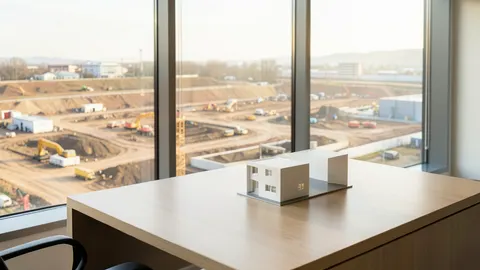
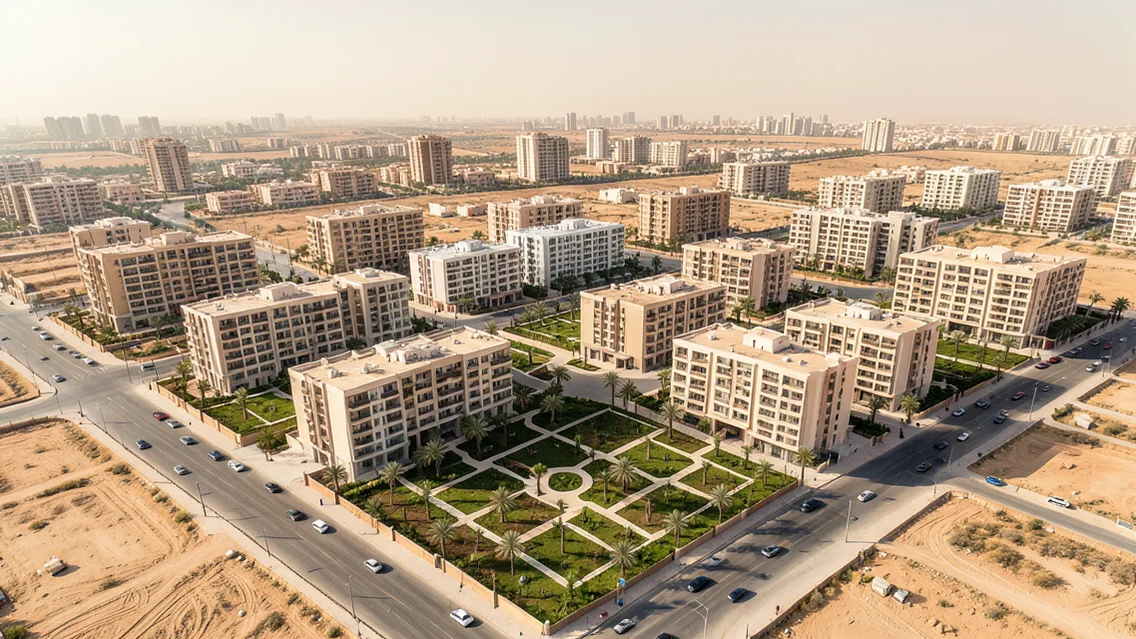
Begin feasibility with land, rights, intended program, unit types, customers and time horizon. Gather dated local transaction, rental, competitor, vacancy and pipeline data and assess affordability. Examine access, utilities, ground, levels, planning constraints, uses and parking; compare products by marketable area and potential demand rather than gross area alone.
Technical and financial feasibility
Define development scope, structural and services options, phases and schedule. Estimate land, design, permissions, construction, marketing, financing, contingencies, operations and exit where relevant. Build cash flows around expenditure and collection dates with explicit price, occupancy and absorption assumptions. Net present value, internal rate of return, profit and return on cost may help depending on objective; define each metric, discount assumptions and timing. Accounting profit is not cash availability.
Scenarios and go/no-go decision
Test lower prices or occupancy, higher costs, delayed approvals, construction or collection, and financing changes. Review break-even points, cash commitments, funding and thresholds for stopping or redesigning. Record each risk's likelihood, impact, owner, response and evidence, and verify regulatory, valuation and financing matters with specialists. Deliver assumptions, dated sources, cost and cash-flow models, scenarios and a conditional recommendation; feasibility does not automatically authorize investment.
Comparison and verification table
| Factor | Evidence or action |
|---|---|
| Market | Demand, competition and dated data |
| Site and technical | Rights, constraints, program and cost |
| Finance | Cash flows, metrics and assumptions |
| Risk | Scenarios and decision thresholds |
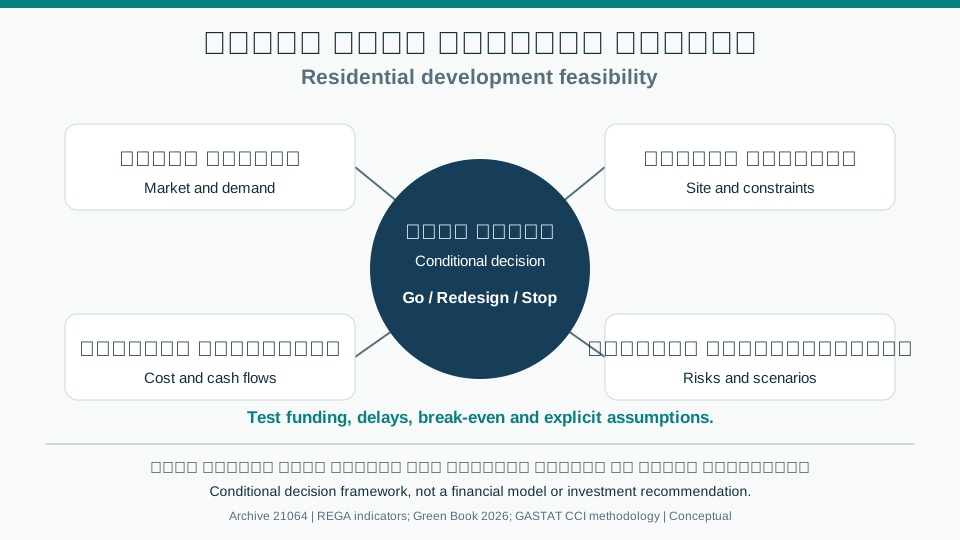
A visual reading of the article topic
- 01Market, site and product
- 02Technical and financial feasibility
- 03Scenarios and go/no-go decision
- 04Comparison and verification table
Practical workflow
- 01 Verify site and market
- 02 Develop options and costs
- 03 Test cash flows and risks
- 04 Make an evidence-based conditional decision
Conceptual editorial diagram; not measured data.
Topics and source excerpts
| Topic | Excerpt from article |
|---|---|
| Market, site and product | Begin feasibility with land, rights, intended program, unit types, customers and time horizon. |
| Technical and financial feasibility | Define development scope, structural and services options, phases and schedule. |
| Scenarios and go/no-go decision | Test lower prices or occupancy, higher costs, delayed approvals, construction or collection, and financing changes. |
| Practical workflow | 01 Verify site and market |
| Sources and limitations | Editorial adaptation based on the original WordPress archive; original source retained separately. |
Source excerpts organized for comparison, not newly researched findings.
Sources and limitations
Editorial adaptation based on the original WordPress archive; original source retained separately. Historical examples, prices, returns and assumptions are not current market data or actual project results; no approved financial model or investment recommendation is provided.
- REGA: Real Estate Indicators FAQ — Location, type and time filters and coverage limits; transaction averages do not value individual properties.
- HM Treasury: The Green Book 2026 — Sensitivity analysis and switching values in UK public appraisal; not Saudi private investment discount rates.
- GASTAT: Construction Cost Index Methodology, July 2026 — Indexed official methodology describes monthly weighted materials, labor, equipment and energy inputs, 2023 base; not current prices or a supplier quotation.