From land to urban system
The source asks why unit price alone cannot explain a neighbourhood's future value. Opportunities may differ with services, accessibility and land use, but a development plan alone does not guarantee appreciation.
Separate announcements from delivery
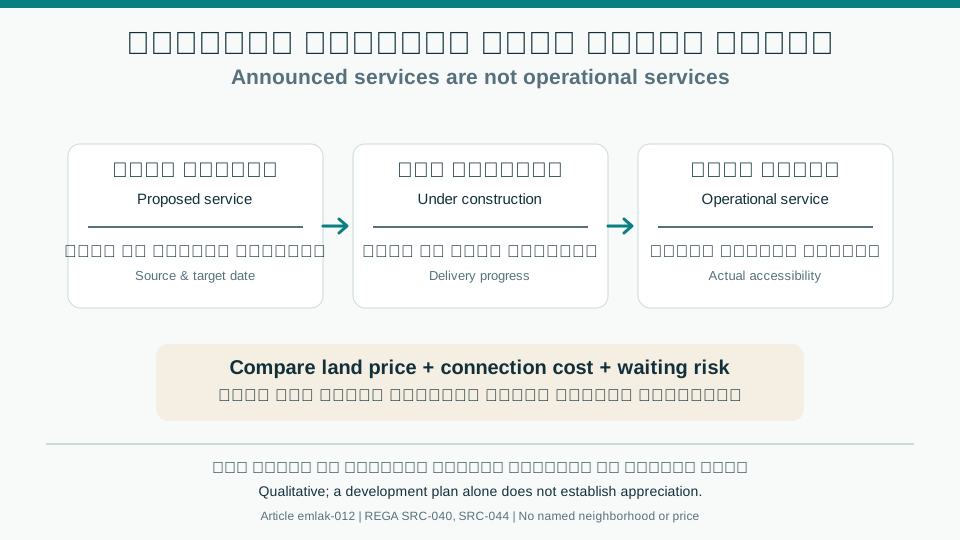
Map operating services, projects under construction and proposals. Record sources and dates, and do not treat target dates as confirmed openings. Check existing transport and utility access before the neighbourhood is complete.
Qualitative comparison
Lower-priced land far from operating utilities may cost more to develop or take longer to use than higher-priced serviced land. Compare connection costs, waiting time and usability or rental potential, not acquisition price alone.
Define site
Verify services
Compare transactions
Stress-test delays
Testing demand and value
Review comparable completed transactions by property type, date and size, competing supply and appeal to target households. Test on-time and delayed service delivery scenarios and set a price ceiling based on risk.
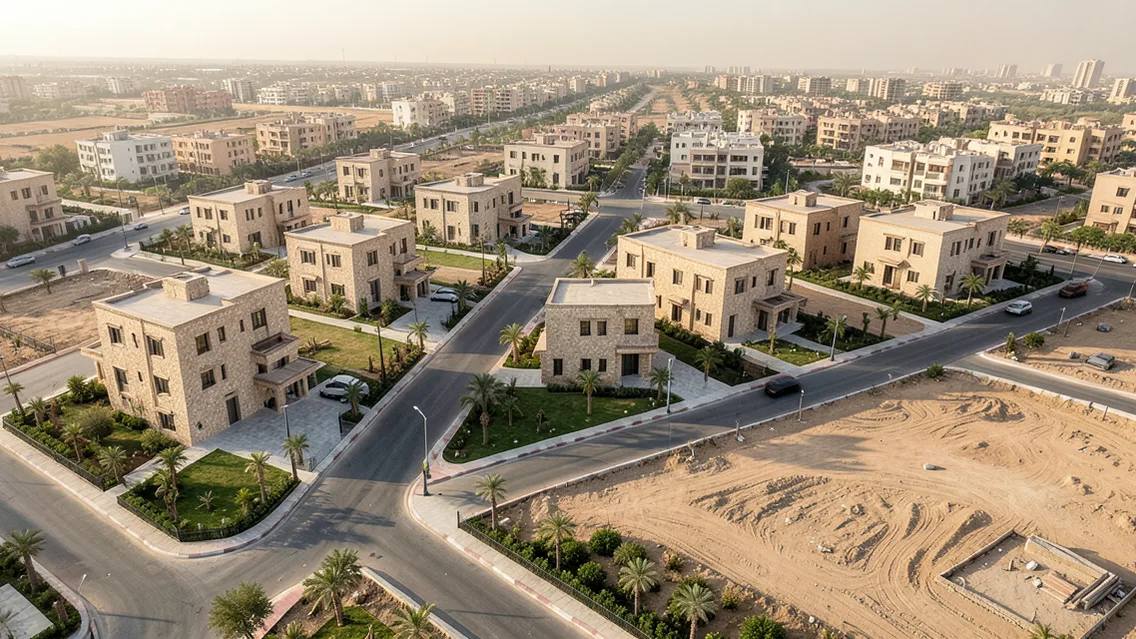
A visual reading of the article topic
- 01From land to urban system
- 02Separate announcements from delivery
- 03Qualitative comparison
- 04Testing demand and value
Decision review table
| Factor | Evidence to check |
|---|---|
| Services | Verified operating status |
| Access | Measured travel time |
| Market | Comparable transactions |
| Development | Cost, timing and risk |
Practical workflow
- Define site
- Verify services
- Compare transactions
- Stress-test delays
Topics and source excerpts
| Topic | Excerpt from article |
|---|---|
| From land to urban system | The source asks why unit price alone cannot explain a neighbourhood's future value. |
| Separate announcements from delivery | Map operating services, projects under construction and proposals. |
| Qualitative comparison | Lower-priced land far from operating utilities may cost more to develop or take longer to use than higher-priced serviced land. |
| Testing demand and value | Review comparable completed transactions by property type, date and size, competing supply and appeal to target households. |
| Source and limitations | Editorial expansion of the author's Emlak contribution; the historical text is retained. |
Source excerpts organized for comparison, not newly researched findings.
Source and limitations
Editorial expansion of the author's Emlak contribution; the historical text is retained. The recovered text is short and mentions REGA indicators without a specified series; the expansion is educational and makes no current price-trend claim.
- REGA: Real Estate Indicators — Sales and rental indicators by location, type and period; not an individual valuation.
- REGA: Real Estate Indicators FAQ — Coverage and location, type and time filters; averages do not value a specific property.