1. Engage an architect early
The source treats budget as a design input rather than a procurement-stage problem. Early advice can define the program, appropriate area and valuable alternatives and develop an estimate including design, permits, construction, fit-out and contingencies. Professional engagement does not guarantee a specific saving, but helps reveal conflicts and costly decisions before construction.
2. Plan and manage changes
Document scope, drawings, specifications, estimates and design maturity, then coordinate structure, services and openings before tendering. Changes need cost, time, performance and safety impact reviews; some are necessary when hazards or errors arise. Compare contractor proposals on equivalent scope instead of relying solely on the lowest price.
3. Simplify massing where it fits
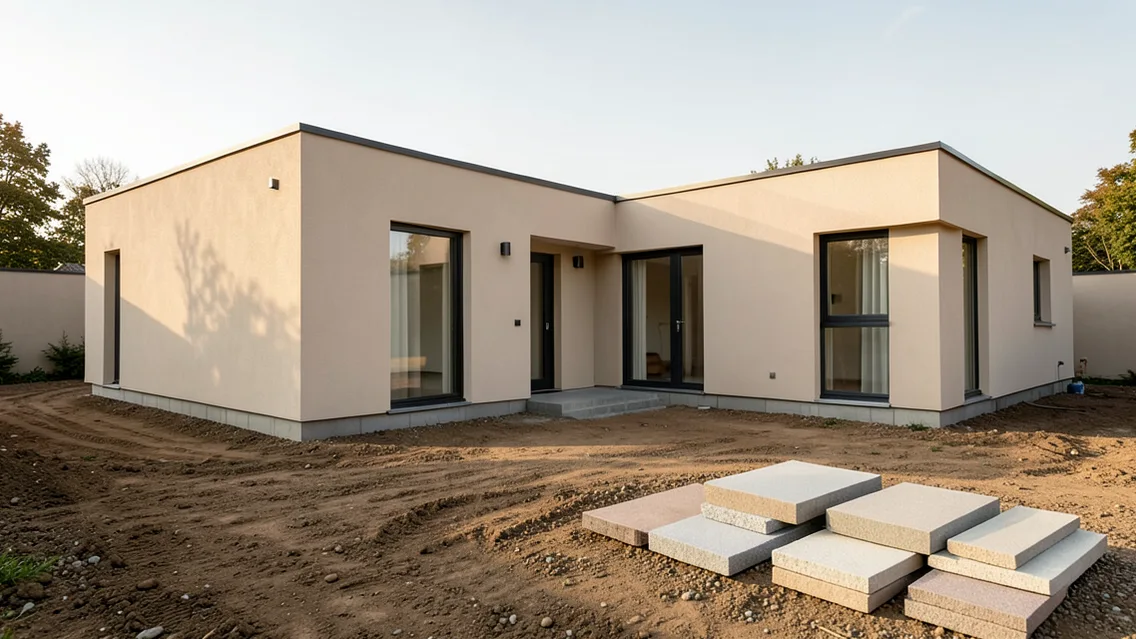
Numerous corners and bespoke details may increase envelope area, formwork, waterproofing, connections and waste, but simple geometry is not always cheapest or best. Compare massing against usable area, thermal performance, daylight, privacy, construction and maintenance. Architectural character can come from proportions, shading and composition instead of additions with no clear function.
4. Rationalize materials without losing performance
Standardizing selected finishes and dimensions may reduce cutting, waste and procurement complexity while providing visual continuity. Different rooms may require different slip, moisture, fire or acoustic properties; do not substitute purely on price. Compare purchase, installation, maintenance, replacement and service life. Structural safety, fire protection and regulatory requirements remain non-negotiable in value engineering.
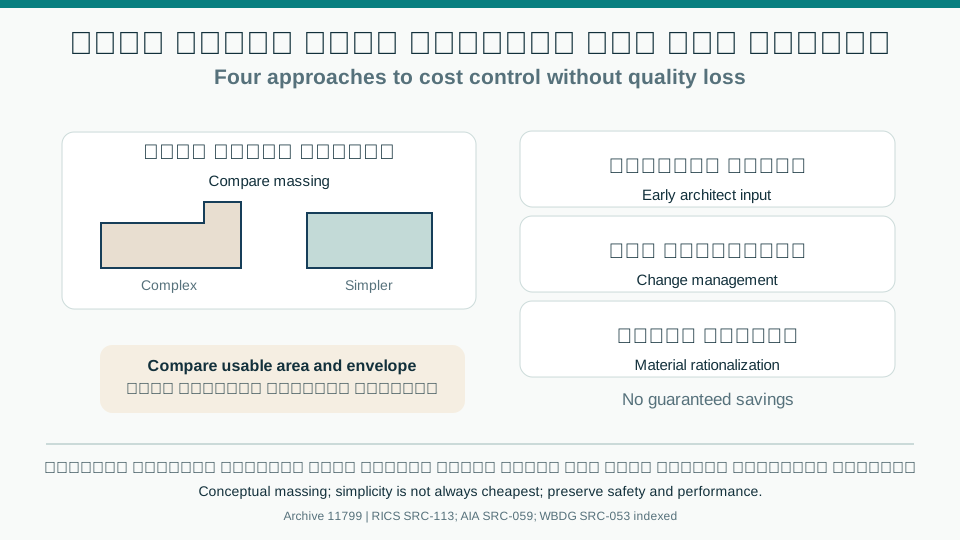
A visual reading of the article topic
- 011. Engage an architect early
- 022. Plan and manage changes
- 033. Simplify massing where it fits
- 044. Rationalize materials without losing performance
Comparison and verification table
| Factor | Evidence or action |
|---|---|
| Early advice | Program and preliminary estimate |
| Planning | Scope, coordination and changes |
| Massing | Simplicity, performance and function |
| Materials | Waste, maintenance and suitability |
Practical workflow
- 01 Define budget and quality scope
- 02 Compare design and cost
- 03 Review options and changes
- 04 Approve without compromising safety
Conceptual editorial diagram; not measured data.
Topics and source excerpts
| Topic | Excerpt from article |
|---|---|
| 1. Engage an architect early | The source treats budget as a design input rather than a procurement-stage problem. |
| 2. Plan and manage changes | Document scope, drawings, specifications, estimates and design maturity, then coordinate structure, services and openings before tendering. |
| 3. Simplify massing where it fits | Numerous corners and bespoke details may increase envelope area, formwork, waterproofing, connections and waste, but simple geometry is not always cheapest… |
| 4. Rationalize materials without losing performance | Standardizing selected finishes and dimensions may reduce cutting, waste and procurement complexity while providing visual continuity. |
| Practical workflow | 01 Define budget and quality scope |
| Sources and limitations | Editorial adaptation based on the original WordPress archive; original source retained separately. |
Source excerpts organized for comparison, not newly researched findings.
Sources and limitations
Editorial adaptation based on the original WordPress archive; original source retained separately. No savings percentages or prices are guaranteed; benefits must be calculated for each project and technical and regulatory requirements remain applicable.
- WBDG: Architectural Programming — Indexed corroboration of goals, functions, activities, costs and timing; staging link stability unconfirmed, prefer complementary readable sources.
- RICS: New Rules of Measurement (NRM) — Cost planning, detailed measurement and maintenance; not a savings estimate or project prices.
- AIA: A Problem Well Stated — Owner Project Requirements — Practitioner guidance on brief, site, function, performance and cost; not code approval or blanket endorsement.