
Historical legal context
The source was published in 2021 and discussed rules of that period. Its numerical thresholds, ownership periods and restrictions must not be treated as current requirements. Verification distinguishes nationality, individual or corporate status, residence, purpose, property right and location, and the effective date of the rule. Consult relevant official authorities before committing.
Property and competent authority
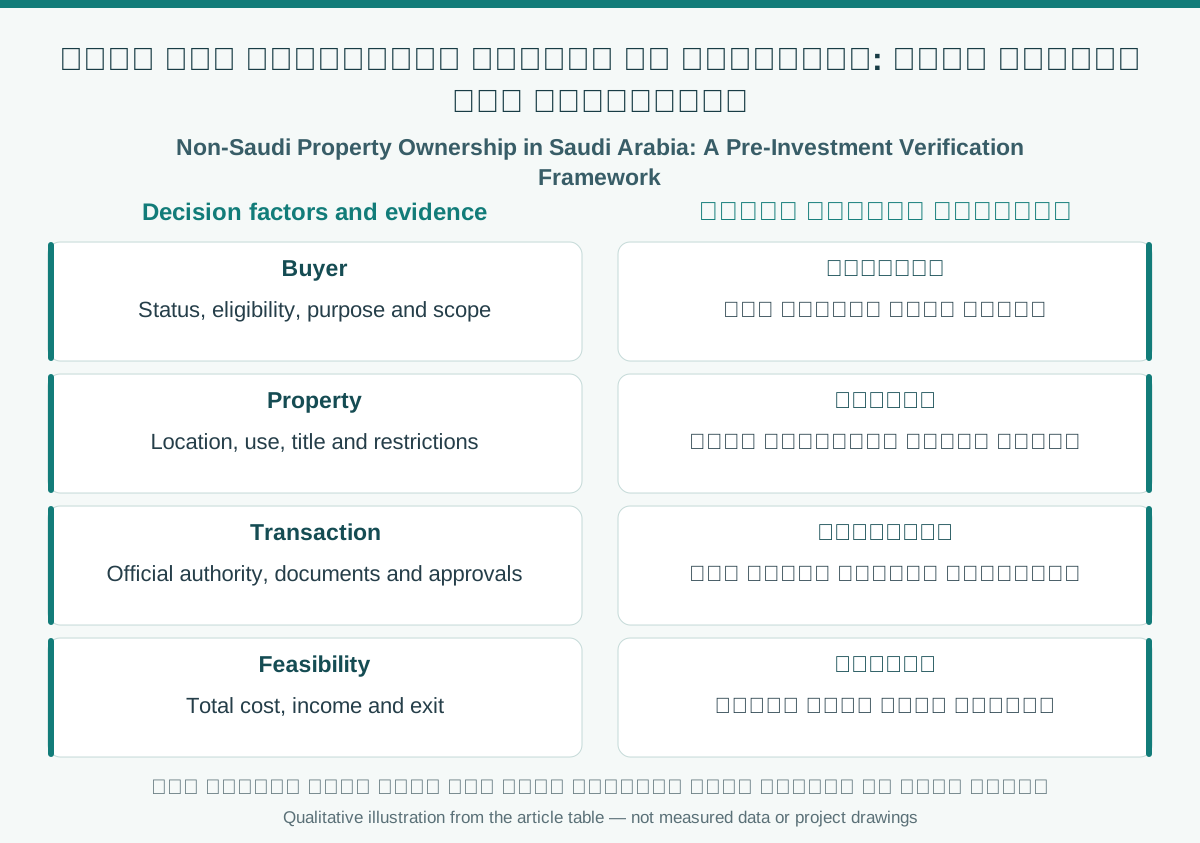
Identify the asset, its identifier, use, location and registered rights, then verify party eligibility and transaction route under the effective framework. Areas with special rules need precise geographic review; do not infer eligibility or general prohibition from a city name alone. Distinguish investment approval or professional licensing from registration of title, as each document may serve a different process.
Feasibility and legal decision
Review seller documents and authority, rights and restrictions, finance, fees, taxes and registration obligations with qualified local assistance. Compare income, acquisition and operating costs, and exit risks under multiple scenarios. Avoid non-refundable commitments before verifying eligibility, title and procedure. Permitted ownership does not establish financial viability.
Decision review table
| Factor | Evidence or action |
|---|---|
| Buyer | Status, eligibility, purpose and scope |
| Property | Location, use, title and restrictions |
| Transaction | Official authority, documents and approvals |
| Feasibility | Total cost, income and exit |
A visual reading of the article topic
- 01Historical legal context
- 02Property and competent authority
- 03Feasibility and legal decision
- 04Decision review table
Practical workflow
- 01 Identify buyer and property
- 02 Verify effective rules officially
- 03 Check rights and costs
- 04 Seek specialist review before commitment
Conceptual editorial diagram; not measured data.
Sources and limitations
Editorial adaptation based on the original WordPress archive; original source retained separately. 2021 thresholds, periods, fees, areas and procedures are retained historically and must not be relied on today without official verification. The article offers neither legal advice nor confirmation of current eligibility.
Topics and source excerpts
| Topic | Excerpt from article |
|---|---|
| Historical legal context | The source was published in 2021 and discussed rules of that period. |
| Property and competent authority | Identify the asset, its identifier, use, location and registered rights, then verify party eligibility and transaction route under the effective framework. |
| Feasibility and legal decision | Review seller documents and authority, rights and restrictions, finance, fees, taxes and registration obligations with qualified local assistance. |
| Practical workflow | 01 Identify buyer and property |
| Sources and limitations | Editorial adaptation based on the original WordPress archive; original source retained separately. |
| References and limitations | The updated non-Saudi ownership law took effect on 22 January 2026, replacing the former framework. |
Source excerpts organized for comparison, not newly researched findings.
References and limitations
The updated non-Saudi ownership law took effect on 22 January 2026, replacing the former framework. Verify eligibility, right type, geographic zone and controls through Saudi Properties before committing; 2021 conditions are not current rules.
The following references support selected topics in the article.
- REGA — Law of Real Estate Ownership by Non-Saudis, arts 1, 2, 14, 15
- REGA — Non-Saudi Property Ownership System Enters into Force
- REGA — Non-Saudi Real Estate Ownership platform